5 Magazine…
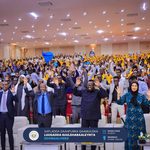
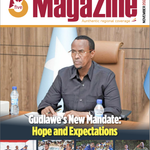
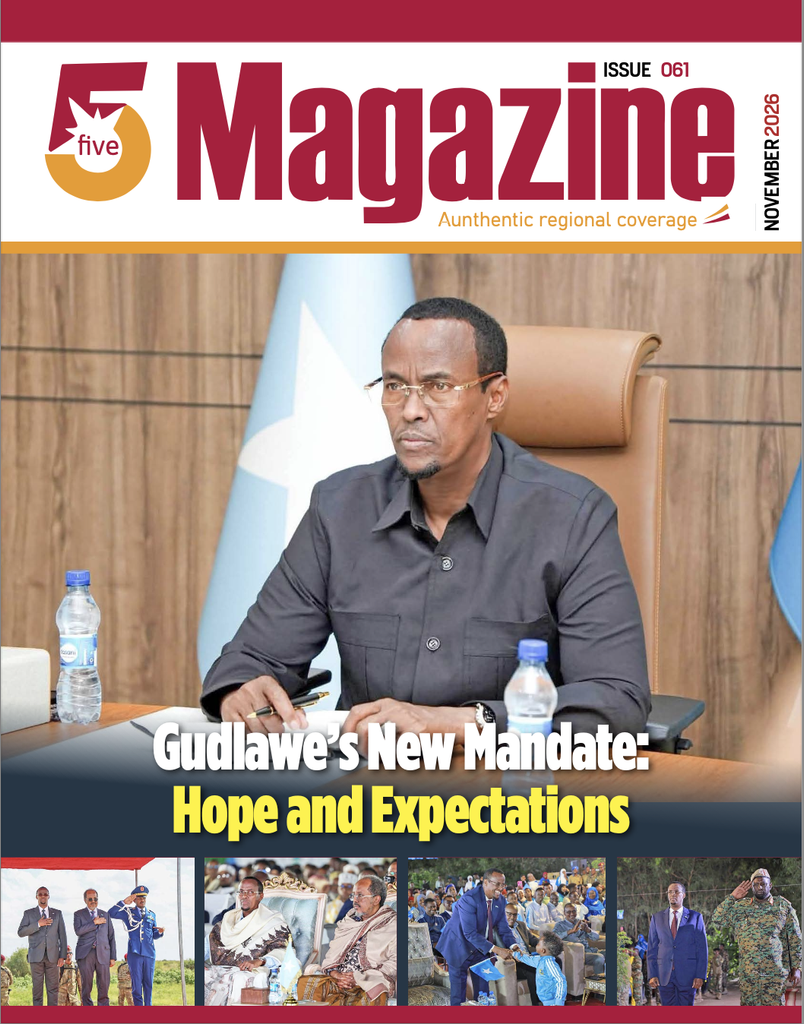
Ali Abdullahi Hussein, popularly known as Ali Gudlawe, has secured a second term as President of Hirshabelle State following his re-election by the members of the Hirshabelle State Legislative Assembly on October 24, 2026. In a decisive parliamentary vote, Gudlawe received 81 votes, securing another five-year mandate to lead the Federal Member State. His re-election marks a continuation of his administration’s efforts to strengthen regional security, expand government institutions, improve public services and advance infrastructure development across Hirshabelle.
In his acceptance speech, President Gudlawe expressed gratitude to the parliamentary leadership, members of the State Assembly, federal government ministers, members of both houses of the Somali Federal Parliament and the various dignitaries who attended the election ceremony. His return to office comes after a first term marked by significant developments in state-building, security operations, institutional expansion and investment in public infrastructure, as his administration sought to strengthen Hirshabelle’s position within Somalia’s federal system.
Gudlawe’s political journey and experience in public administration stretch back more than two decades, with much of his early career rooted in the regional administration of Middle Shabelle. Born in 1974 in Mahaday District, he completed his early education locally in Jowhar before graduating from Somali International University. His public service career took off between 2001 and 2006, when he served as Chief of Finance for the Middle Shabelle Regional Administration under the Mohamed Dheere administration. His responsibilities expanded during the Transitional Federal Government era, when he served as Deputy Governor of Middle Shabelle from 2007 to 2009. He subsequently rose to become the region’s governor, serving in 2014 and again in 2016.
As the foundations of Hirshabelle State began to take shape, Gudlawe served briefly as Interim President in mid-2017 before successfully running for Vice President later that year. During his tenure as Vice President, he earned regional recognition for overseeing the recruitment, establishment and initial instruction of the state’s first formal police force, an important step towards building local security institutions. His rise through the ranks of regional leadership culminated on November 12, 2020, when he was elected President of Hirshabelle, securing 86 out of 99 votes in the regional parliament and beginning his first full presidential term.
During his first term, which spanned 2020 to 2026, Gudlawe placed considerable emphasis on territorial security and regional stabilisation, working closely with the Federal Government of Somalia and local clan militias to spearhead offensive operations against Al-Shabaab. These efforts helped liberate several territories that had remained outside government control for years, creating opportunities for the restoration of local administration and public services. Following the security gains, his administration focused on establishing district councils and extending essential services, including educational programmes and health resources, to communities in newly recovered areas.
His administration also pursued reforms in public finance, notably through the implementation of a unified tax collection system that increased the state’s internal revenue streams and strengthened its capacity for financial self-reliance. On the social and political front, Gudlawe played a role in mediating localised clan conflicts and facilitating peace agreements, including efforts involving communities in Adale and Jowhar and initiatives aimed at ending heavy fighting in Beletweyne. His government also made efforts to expand women’s participation in public leadership, increasing their representation in regional political structures through appointments to ministerial, judicial and local council positions.
Beyond security and governance, infrastructure development became one of the defining features of Gudlawe’s first administration, with Jowhar emerging as a major centre of investment in government facilities and urban infrastructure. One of the most significant demonstrations of this progress came on June 11, 2026, when the President of the Federal Republic of Somalia, Hassan Sheikh Mohamud, visited Jowhar alongside President Gudlawe to inaugurate several major projects. These included Villa Hirshabelle, the newly constructed headquarters of the Ministries of Education and Finance, and three major roads: Horseed Road, Hanti-Wadaag Road and Jowhar-Bile Road. The inauguration represented an important milestone in the state’s efforts to build stronger institutions, improve public service delivery and create an environment conducive to economic growth.
Among the most prominent developments was Villa Hirshabelle, the state’s new presidential complex and official seat of the presidency. The modern facility represents a visible commitment to establishing durable and professional government institutions capable of serving future generations. Similarly, the new headquarters for the Ministries of Finance and Education provide dedicated working environments for government departments, strengthening their capacity to operate efficiently and deliver services to the public. Former Prime Minister Professor Ali Mohamed Gedi highlighted the significance of this transformation, observing that institutions which once operated from makeshift facilities were now housed in purpose-built government offices.
The road projects also represent an important investment in connectivity and economic activity, particularly for communities whose livelihoods depend on agriculture and trade. Hanti-Wadaag Road, in particular, is expected to improve connections between agricultural communities and markets, reduce transportation challenges and facilitate the movement of goods. Together with Horseed Road and Jowhar-Bile Road, the projects are expected to improve residents’ access to government services, educational institutions, healthcare facilities and commercial opportunities.
Education has also featured prominently in the administration’s development agenda. According to Hirshabelle Minister of Education Said Hagar Hagaley, the state’s educational investments include the construction of 23 new schools stretching from Mataban to Balcad, the full rehabilitation of 11 existing schools and the expansion of classroom capacity in another 15 schools. The newly inaugurated Ministry of Education headquarters is expected to support the delivery and coordination of educational services reaching more than 100,000 students. These investments reflect the administration’s recognition that education is among the most important foundations for sustainable development and the preparation of a new generation capable of contributing to the state’s future growth.
Financial governance has similarly received attention, with the new Ministry of Finance headquarters providing additional institutional capacity for revenue administration and public financial management. According to Finance Minister Cabdiraxiin Ciise Caddow, the modern two-storey facility contains 18 offices and two conference halls designed to improve the ministry’s operations. The investment is expected to strengthen fiscal governance, improve administrative efficiency and support the state’s ability to plan and finance public services.
The June 11 visit also brought together senior federal and state officials, parliamentarians, traditional elders, business leaders and members of the public, reflecting the broad interest in Hirshabelle’s development. President Hassan Sheikh Mohamud praised the administration’s commitment to infrastructure and institutional development, while former Mayor of Mogadishu Mohamed Osman Ali Maxamed commended the visible progress across the region. Former National Intelligence Chief General Abdirahman Turyare linked the implementation of large-scale projects to improvements in security and institutional growth. Meanwhile, Somali Chamber of Commerce Chairman Abdikariin Gabeyre encouraged private-sector players to explore emerging opportunities in Jowhar, particularly in its historically important agricultural and industrial sectors.
For Gudlawe, the inauguration of these projects represented both a celebration of progress and a reaffirmation of his administration’s ambitions. He described the developments as part of a broader vision to make Hirshabelle one of Somalia’s best-performing Federal Member States, noting that additional major projects were already under implementation and would be unveiled in the coming months.
With a fresh mandate secured, Gudlawe now faces the task of building on the foundations laid during his first term, consolidating security gains, strengthening public institutions, expanding essential services and ensuring that development reaches communities beyond the state capital.