5 Magazine…
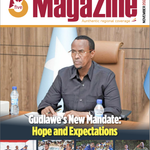
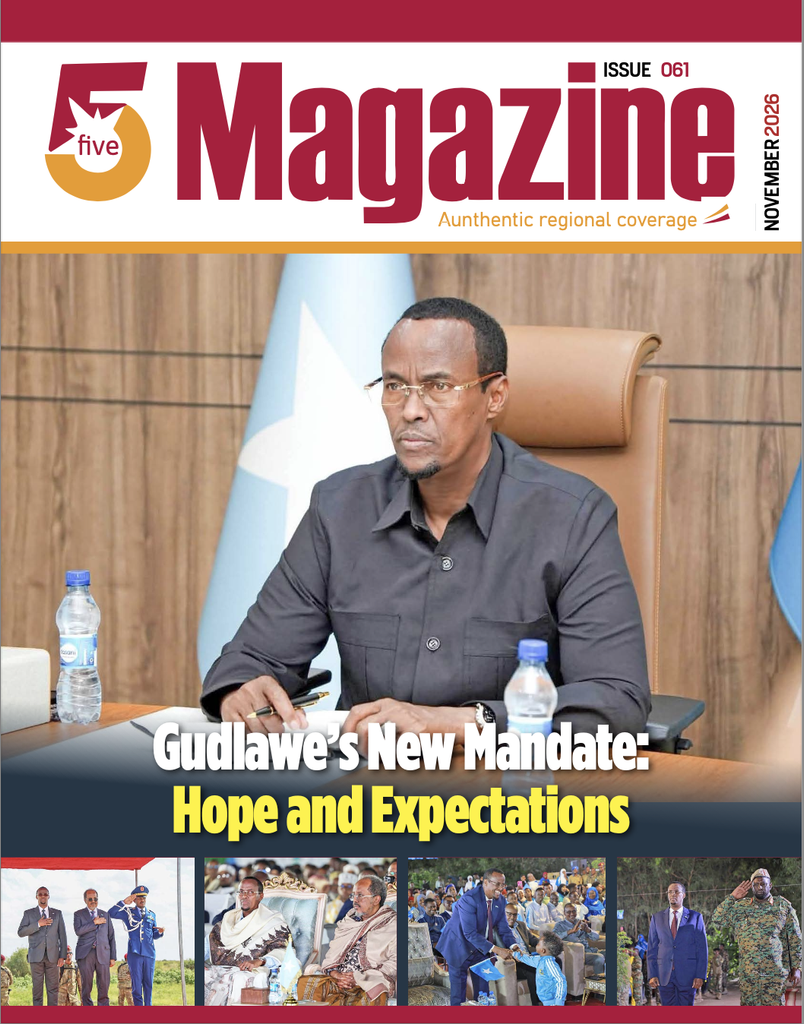
The re-election of Ali Abdullahi Hussein, popularly known as Ali Gudlawe, as President of Hirshabelle State has drawn widespread reactions from Somalia’s federal leadership, opposition politicians and citizens, with messages of congratulations and calls for unity, reconciliation and improved service delivery dominating the response. His victory, alongside the election of Abdifitah Hassan Afrah as the new Vice President, has been welcomed by political figures across different political affiliations, while celebrations have been reported in several towns, including Beledweyne, Warsheikh and Mogadishu.
At the federal level, President Hassan Sheikh Mohamud and Prime Minister Hamza Abdi Barre were among the first senior government officials to congratulate the newly elected leadership, highlighting the responsibilities that come with another mandate and the need to prioritise security, state-building and reconciliation. Their messages reflected the expectations facing the returning administration, particularly the need to consolidate stability, strengthen cooperation among communities and extend essential services to the people of Hirshabelle.
In his congratulatory message, President Hassan Sheikh urged the new leadership to place security, state-building and social reconciliation at the centre of its priorities, while ensuring that all communities across the state benefit from government services and representation. He emphasised that the administration must work towards strengthening unity, social cohesion and public trust, particularly at a time when continued reconciliation remains essential to the state’s stability.
“I urge the new leadership to make the protection of security, strengthening state-building, accelerating community reconciliation and improving essential services their foremost priorities, while serving all the people of Hirshabelle and working towards unity, cohesion and mutual trust among communities,” President Hassan Sheikh said.
Prime Minister Hamza Abdi Barre similarly congratulated Gudlawe and his deputy, wishing them success in fulfilling the responsibility entrusted to them by the people of Hirshabelle. He stressed that the new administration would be expected to consolidate peace and security, strengthen social unity, accelerate reconciliation efforts and improve the delivery of public services. His message underscored the importance of translating the renewed mandate into tangible improvements in the lives of residents across the two regions that make up Hirshabelle.
Other senior federal officials also joined in congratulating the elected leaders, including Deputy Prime Minister Salah Jama and Speaker of the House of the People, Abdikadir Mohamed Nur, alongside other government figures.
Beyond the government, the re-election also received positive responses from several opposition politicians, suggesting a degree of political acceptance of the outcome despite the different affiliations and positions represented in Somalia’s political landscape. Some opposition figures welcomed the election held in Jowhar, which returned Gudlawe to the presidency and elected Abdifitah Hassan Afrah as his deputy, while using the occasion to remind the new leadership of the need for inclusive governance and genuine reconciliation.
Abdulkadir Osoble, a prominent politician associated with the opposition Salvation Forum, congratulated Gudlawe and his deputy, wishing them success and asking Allah to make it easier for them to fulfil the heavy responsibility entrusted to them. His message reflected the goodwill extended by some opposition figures towards the newly elected leadership, while also recognising the considerable expectations accompanying another term in office.
Former Minister of Internal Security Mohamed Abukar Islow Duale, who is associated with the Haybad Qaran Alliance, also congratulated the new Hirshabelle leadership. However, he placed particular emphasis on the need to address divisions and strengthen unity among communities across the two regions. He called on the administration to pursue meaningful reconciliation, especially with communities that continue to feel marginalised or have unresolved grievances.
“I urge the new leadership to govern with unity in mind and work towards achieving genuine reconciliation among the people of Hirshabelle, particularly those who have grievances,” he said.
Former Somali Prime Minister Ali Mohamed Gedi also welcomed Gudlawe’s return to office, describing him as an experienced and tested moderate leader with the capacity to guide the administration towards peace, stability and sustainable development. His endorsement highlighted the importance of political experience and continuity at a time when Hirshabelle continues to navigate security challenges, internal divisions and the demands of institutional development.
At the regional and municipal levels, Mogadishu Mayor Hassan Mohamed Hussein Muungaab extended warm congratulations to Gudlawe and his deputy. In a statement issued by his office, Muungaab said the newly elected leaders were expected to serve the people of Hirshabelle with sincerity and a strong sense of responsibility, wishing them success in their new mandate.
He also commended the efforts of the Independent National Electoral and Boundaries Commission, which administered the election, and encouraged the elected leadership to strengthen cooperation between the Federal Government, Federal Member States and the Banadir Regional Administration. He noted the importance of such collaboration in consolidating national peace, unity and political cohesion.
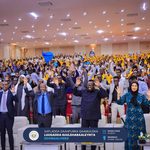
While political leaders exchanged messages of congratulations and offered advice on the priorities of the new administration, the election also prompted visible celebrations among citizens in several parts of the country. In Beledweyne, the administrative centre of Hiraan Region, residents took to the streets to celebrate Gudlawe’s re-election, with public demonstrations of support reported to have continued following the announcement of the results. The gatherings reflected the public attention surrounding the leadership contest and the significance attached to the outcome in different parts of the state.
Similar celebrations were reported in Warsheikh District in Middle Shabelle, where large numbers of people gathered to express support for the re-elected president. In Mogadishu, crowds also filled several streets to celebrate Gudlawe’s victory, demonstrating that the reaction extended beyond Hirshabelle’s administrative boundaries into the national capital. The gatherings in these locations provided a visible expression of public enthusiasm surrounding the election and the return of the incumbent president for another term.
The celebrations in Beledweyne and Warsheikh were particularly notable given the importance of both Hiraan and Middle Shabelle in Hirshabelle’s political and administrative structure. As communities across the two regions continue to navigate questions of security, representation, reconciliation and development, the public response to the election highlights the importance of leadership decisions and their wider implications for the state’s future. However, the demonstrations should also be viewed alongside the calls for inclusivity and reconciliation raised by political figures, particularly those who have emphasised the need to address the concerns of communities that feel excluded.