The launch puts inclusive education in focus as the ministry under Farah Sheikh Abdulkadir pursues a nationwide target of 10,000 teacher hires and reforms to improve classroom learning.
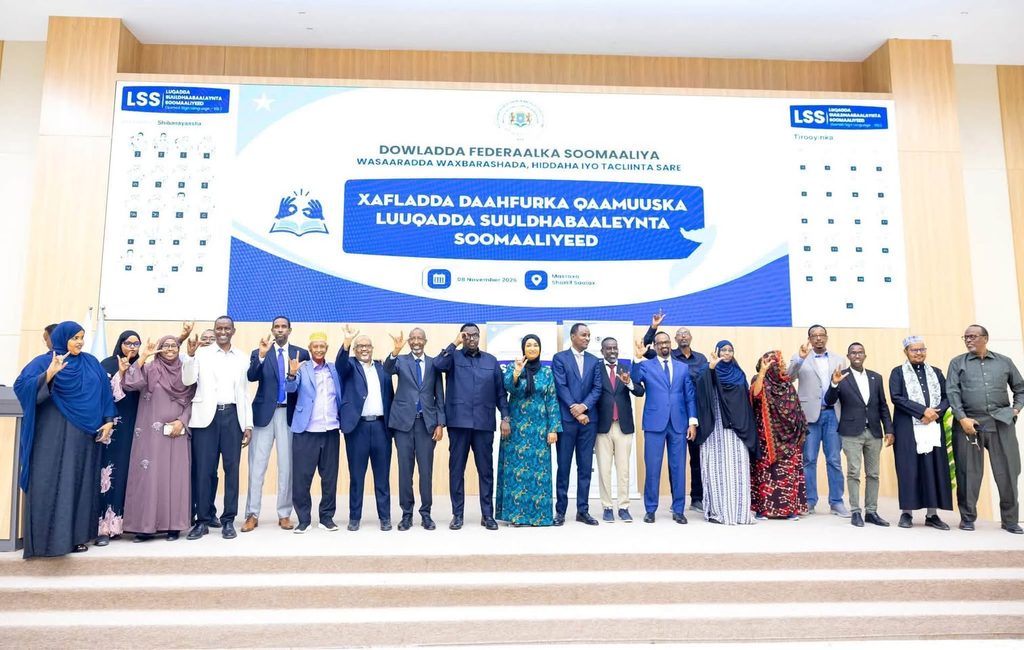
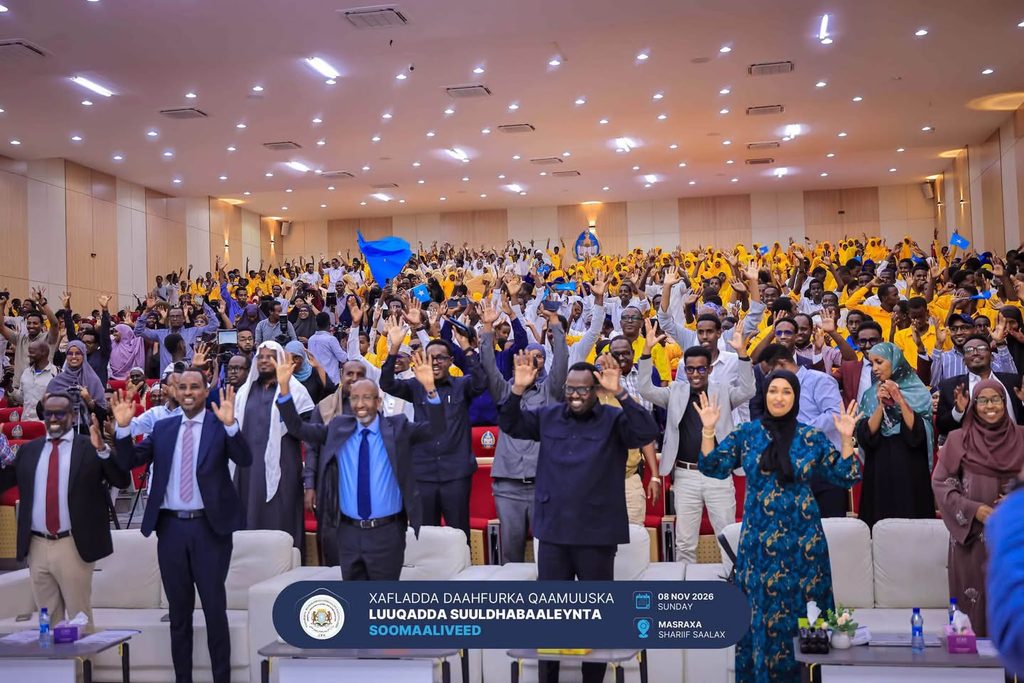
Somalia’s Ministry of Education, Culture and Higher Education Farah Abdikadir launched the country’s first Somali Sign Language Dictionary in Mogadishu on 8 November, giving schools, families and public institutions a shared reference for communicating with Deaf and hard-of-hearing Somalis. The ministry presented the dictionary as part of its effort to make education more accessible and expand the use of Somali Sign Language in public life.
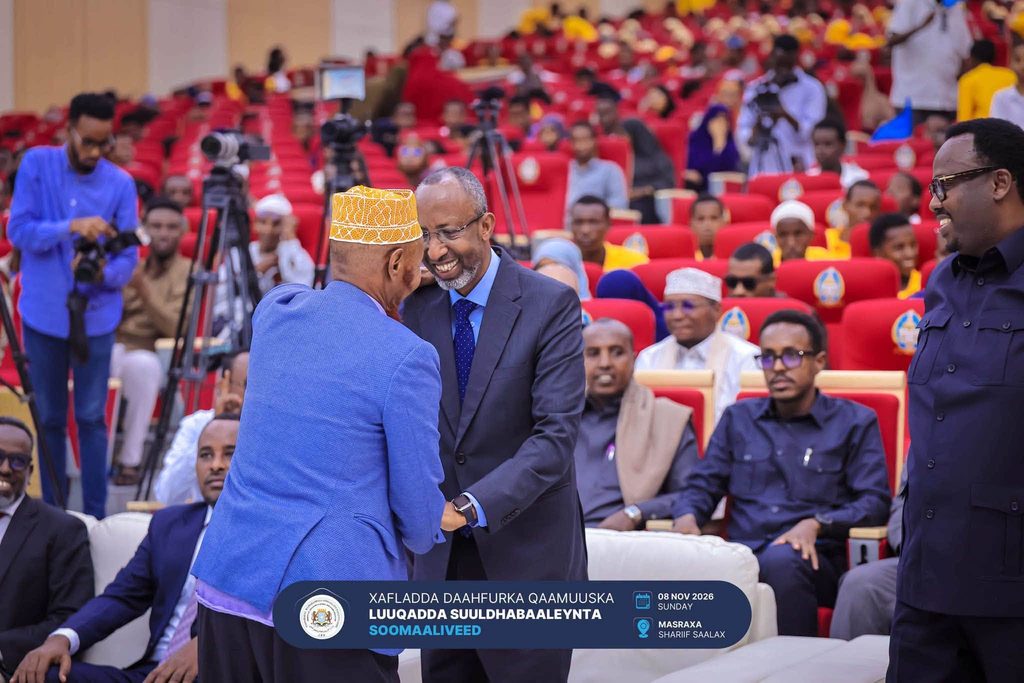
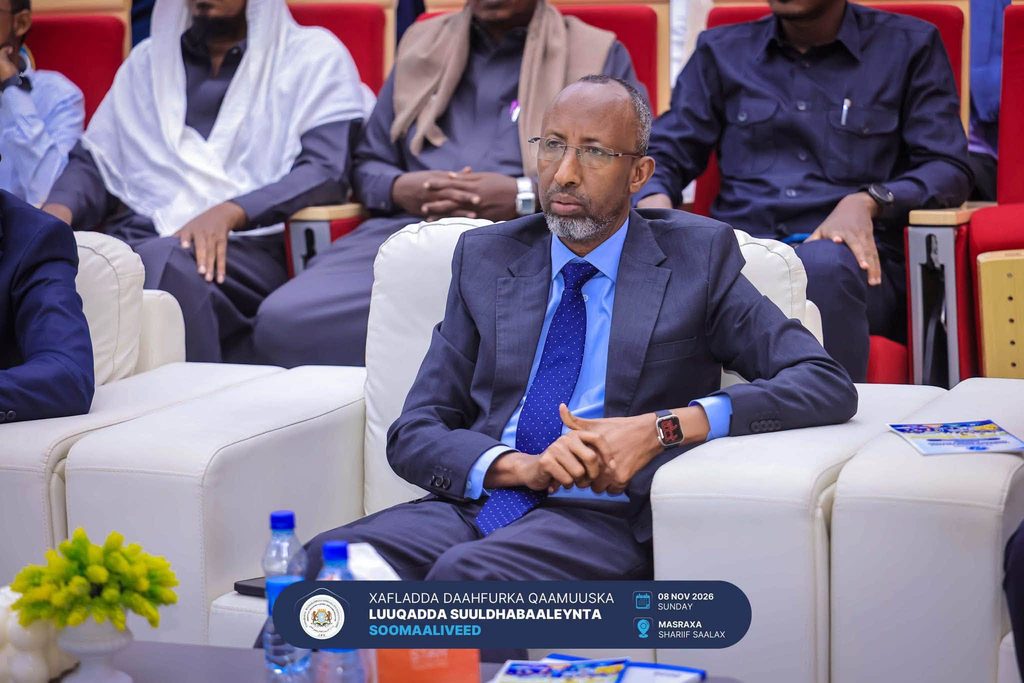
Deputy Prime Minister Salah Ahmed Jama attended the launch alongside Education Minister Farah Sheikh Abdulkadir and Minister of Family and Human Rights Development Khadija Mohamed Al-Makhzoumi. Representatives of the Deaf and hard-of-hearing community also took part in the ceremony.
Jama praised the ministry’s work to develop Somali Sign Language and called for its wider use. He also urged employers to provide equal job opportunities for Deaf and hard-of-hearing people, linking access to communication with the ability to participate fully in the workplace.
Farah said his ministry would prioritise teacher training and expand the use of Somali Sign Language to improve access to quality education. For teachers, the dictionary can provide a reference for preparing lessons and explaining unfamiliar terms. For families, it offers a way to learn signs they can use at home. Its reach in classrooms will depend on how widely it is distributed and how effectively it is incorporated into teacher training.
Teacher recruitment under Farah
The dictionary launch comes amid a broader effort to expand public education under Farah’s leadership. According to Somalia’s national report to the United Nations, the government recruited 3,000 teachers in 2023 and another 3,000 in 2024. Of the first group, 1,275 were assigned to primary education. Federal, state and Banadir education authorities later agreed to recruit and deploy 4,000 more teachers for the 2026–27 academic year, a round intended to bring the nationwide total to 10,000.
The recruitment drive is one part of Somalia’s Education Sector Strategic Plan, which federal and state authorities have jointly implemented. The ministry’s sector review recorded a rise in the primary gross enrolment rate from 24% in 2021 to 33.8% in 2023. Over the same period, enrolment in Alternative Basic Education, which provides a more flexible route into learning, rose from about 40,400 to 111,200. The review also recorded a persistent gap. Children with disabilities accounted for about 1% of pupils enrolled in primary education in the data reviewed.
Improving the quality of education
Alongside recruitment, education authorities agreed to review the national curriculum, introduce national assessments for pupils in Grades 3 and 6, and strengthen teacher training. The assessments are intended to give education officials a clearer picture of what pupils are learning at different stages of primary school. Authorities also agreed to expand school feeding and improve safety and sanitation, measures that address some of the conditions that affect whether children can attend school and learn regularly.
The sign language dictionary brings a specific classroom need into that wider reform programme. A school may have more teachers and more places for pupils, yet a Deaf learner still needs a way to follow lessons, ask questions and take part in class. Farah’s pledge to train teachers gives the ministry a practical way to put the dictionary to work. For Deaf and hard-of-hearing students, the effect will be felt in everyday exchanges with teachers and classmates.