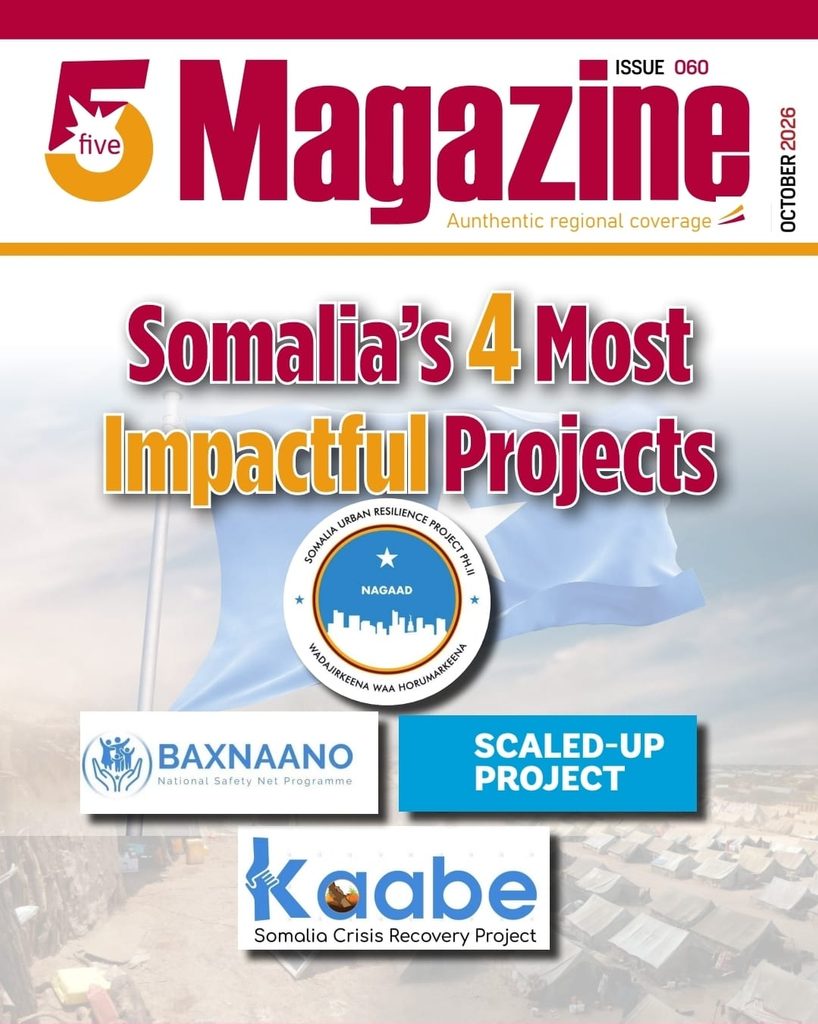
How a government-led program is helping families withstand shocks, protect human capital and build a more resilient future.
In the busy Sigalow neighbourhood of Beledweyne, Hawa Nur Abdi arranges goods in the small shop she built step by step. Nearby, her daughter turns her talent for henna into income for the family. Their businesses are modest, but what they represent is much larger: a family moving from uncertainty toward the confidence to plan.
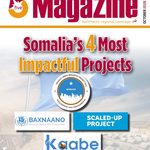
That journey captures the purpose of Baxnaano. Launched in 2019 through the World Bank-financed SNHCP, Baxnaano became Somalia’s first government-led national social protection program. Its Somali name conveys uplifting and care. In practice, it means giving vulnerable households a dependable way to manage hardship, protect their children and make decisions with dignity.
Led by the Federal Government through the Ministry of Labour and Social Affairs, with support from the World Bank, the Somalia Multi-Partner Fund and implementation partners, Baxnaano has turned social protection from a series of emergency interventions into the foundation of a national delivery system.
From emergency response to lasting resilience
Baxnaano’s reach is one of its defining successes. Since its launch, the program has supported more than four million Somalis with cash transfers. Families under the regular window receive predictable assistance to meet essential needs, while support can increase during national emergencies. The result is a program that responds to today’s crisis while helping households prepare for tomorrow.
This flexibility matters in a country repeatedly tested by drought, floods, locust infestations, displacement and economic pressure. In December 2023, additional financing was approved to provide emergency transfers to 215,000 households affected by floods and drought, while extending regular support to poor households. The ability to scale quickly has given Somalia a practical national instrument for protecting people when shocks spread across communities.
Yet the value of predictable assistance is found in everyday choices. A mother can buy food and clean water, seek treatment, pay school costs or protect a productive asset rather than sell it. A household can avoid reducing meals, taking a child out of school or assuming harmful debt. Cash gives families the flexibility to respond to the priorities they understand best while supporting nearby shops and local markets.
Baxnaano’s human-capital window carries this investment further. Support linked to health, nutrition and education focuses on pregnant and lactating women, young children and pupils whose enrolment and attendance must be protected. The program therefore does more than address immediate consumption; it helps build healthier, better-educated generations.
When predictable support becomes possibility
Women are at the centre of Baxnaano’s delivery model. Directing mobile payments to female caregivers strengthens their role in household decisions and helps channel resources toward food, health and children’s welfare. Digital payments reduce travel and collection costs, while continued work on access.
For Hawa, repeated floods had damaged the family’s farming livelihood and made income uncertain. After joining Baxnaano, she used her first payments to buy corrugated iron and begin constructing a small shop. Later transfers helped her stock tomatoes, household goods and other essentials. As the shop grew, she added a henna salon inspired by her daughter’s skill.
“I want all my children to go to school, even to university.”
The income now contributes to school fees, utilities and everyday household needs. More importantly, it has given the family a platform from which to keep building. Hawa’s experience shows that predictable support works best when it meets people’s determination: the program creates breathing room, while families supply the ideas, work and ambition.
Across Somalia, millions of household decisions tell the same wider story. Baxnaano is not simply transferring cash. It is protecting human capital, expanding women’s agency and giving families greater control over how they recover and progress.
BAXNAANO IMPACT AND THE ROAD AHEAD
The system behind the success
Baxnaano’s achievement is measured not only by the transfers delivered, but also by the public infrastructure built around them. The program has strengthened the Unified Social Registry, the Social Protection Delivery System, beneficiary identification, secure mobile payments, monitoring, citizen engagement and grievance management. Together, these functions allow government to identify need, deliver support, respond to crises and improve performance.
This matters in a fragile and climate-exposed setting. A government-led platform can connect emergency response with longer-term development, reduce fragmented delivery and strengthen accountability between citizens and public institutions. The national toll-free grievance channel gives people a way to seek information, report payment or enrolment problems, appeal decisions and raise sensitive concerns through confidential procedures.
Evidence helps the system learn. Registry records, payment data, field monitoring, survey findings and grievance trends show where services are reaching people and where barriers remain. Data protection, informed engagement and secure information-sharing are essential so that stronger delivery does not come at the expense of privacy or trust.
Environmental and social safeguards are equally central. Inclusive consultation, worker protection, prevention of sexual exploitation and abuse, security risk management and timely incident response help ensure that women, persons with disabilities, displaced households and remote communities can participate safely and equitably.
A roof a herd and a stronger voice
In Galdogob, Puntland, Wardi Mohamed Hussein first used Baxnaano support for food, clean water and essential household items. As the daily pressure eased, she began saving small amounts. She bought building materials and two goats. Over time, the herd grew to 18 goats, providing milk for her children and an asset the family could rely on in difficult moments.
The family also moved from a fragile shelter into a more secure home. A roof protected the children from harsh weather; livestock provided food and a financial buffer; and a predictable source of income gave Wardi a stronger voice in household decisions.
“Having an income, even a small one, gives you dignity.”
Her progress was incremental, not miraculous, and that is precisely why it matters. Resilience is often built through a sequence of practical decisions made possible at the right time. Baxnaano gave Wardi the stability to turn two goats into a growing asset and temporary shelter into a safer home.
At national level, the same principle applies. A functioning social protection system gives Somalia an instrument it can use before, during and after crises. When delivery is consistent and people can obtain answers when something goes wrong, assistance also strengthens trust between citizens and the state.
From protection to opportunity
Baxnaano’s success now provides the foundation for a broader ambition. BOOST-You expands the platform beyond income protection by linking social assistance with jobs and economic inclusion. Young people and vulnerable households will be supported through employability services, skills development, enterprise pathways, coaching, market connections and responsible access to finance through Gargaara and participating financial institutions.
By 2029, BOOST-You aims to create 28,000 jobs for young people, including 16,800 opportunities for women. Its design carries forward lessons from the Banadir economic inclusion pilot and places safeguards, labour standards and grievance procedures within employment and financing activities.
The program’s four connected components now form one pathway: jobs and economic inclusion create opportunity; social protection protects families and human capital; adaptive systems connect people to services; and project management and capacity building strengthen the institutions responsible for delivery. Federal and state coordination, monitoring, communications, third-party verification and continuous training support the entire structure.
A Somali foundation for the future
In October 2025, the World Bank approved US$112 million for BOOST-You, expected to benefit about 123,000 households, or approximately 738,000 people. This next phase is possible because Baxnaano has already shown that government-led social protection can operate at meaningful scale in Somalia.
Its success can be seen in national systems and large numbers, but also in the lives behind them: a child remaining in school, a mother seeking health care, a family keeping its livestock, a woman opening a shop and a young person finding a route to work. Baxnaano has given millions of Somalis greater room to choose, recover and plan. That is the program’s most powerful achievement – and the foundation on which Somalia’s next chapter of resilience can be built.