By 5 Magazine…
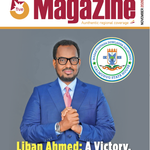
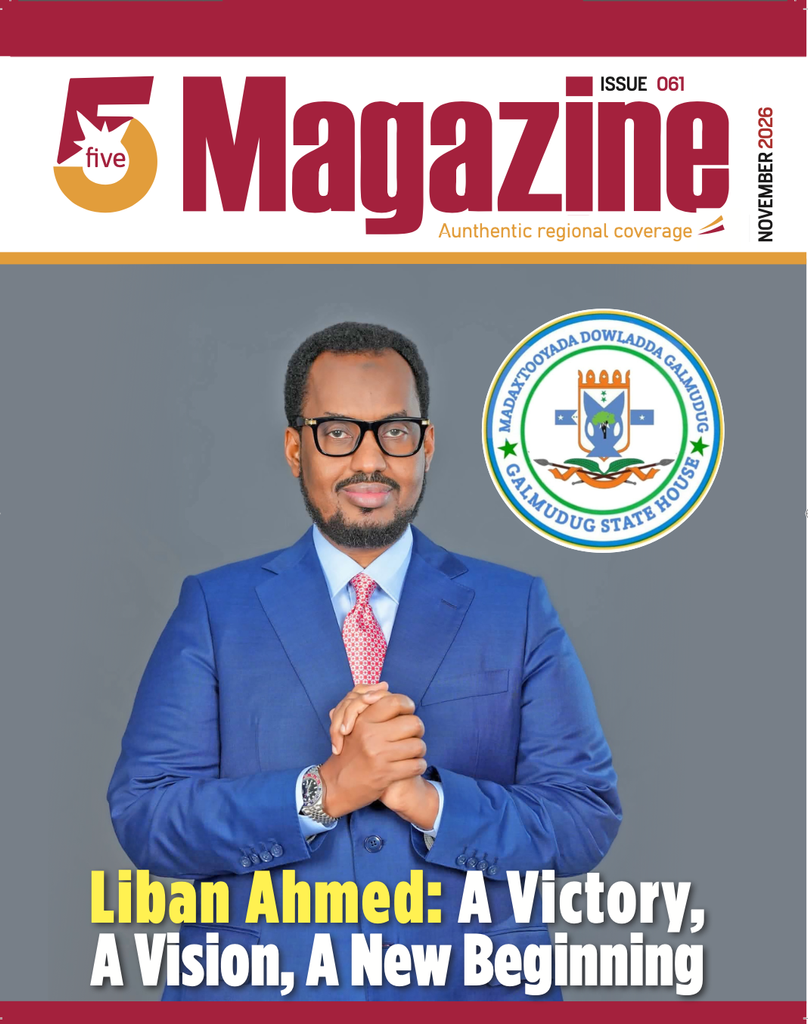
From entrepreneurship and regional development to the presidency, Liban Ahmed Hassan’s election signals a new chapter for Galmudug, with renewed expectations for peace, economic growth, inclusive governance and stronger public institutions.
The election of Liban Ahmed Hassan as President of Galmudug State marks a significant moment in the political journey of one of Somalia’s federal member states. Representing the ruling Justice and Solidarity Party (JSP), Hassan, popularly known as Liban Shuluq, secured a decisive victory in the parliamentary election, earning the confidence of an overwhelming majority of the state’s lawmakers.
Hassan received 72 votes out of the 89-member House of Representatives, defeating his challenger, Abdulkadir Abdullahi Diriye of the Sincad political organisation, who garnered 14 votes. Three ballots were declared invalid, according to an announcement by Parliament Speaker Hussein Mohamed Nur.
His election for a five-year term comes at an important time for Galmudug, as the state continues to navigate questions of security, political reconciliation, institutional development and economic transformation. For many residents, the new administration represents an opportunity to consolidate progress, address longstanding challenges and build a more prosperous future.
Hassan succeeds Ahmed Abdi Kariye, widely known as Qoor Qoor, who had led Galmudug since February 2020 and announced in June that he would not seek another term. The peaceful transfer of leadership provides an opportunity for institutional continuity while opening the door to new priorities and approaches under the incoming administration.
From Entrepreneur to President
Liban Ahmed Hassan’s journey to the presidency reflects a career shaped by entrepreneurship, ambition and an enduring interest in the development of Galmudug.
Before entering the highest office in the state, Hassan established himself as a pioneering entrepreneur, earning recognition for his business acumen, personal drive and interest in initiatives capable of stimulating regional economic activity.
His professional journey has been closely associated with efforts to improve infrastructure, expand economic opportunities and support the modernization of communities across central Somalia. Through his business activities and development-oriented initiatives, he has demonstrated an appreciation of the relationship between economic investment, employment creation and the long-term prosperity of communities.
Among the development priorities associated with his work are critical regional infrastructure and energy initiatives, alongside efforts to advance strategic projects such as the Hobyo port and airport. These projects hold considerable significance for Galmudug’s economic future, particularly given the state’s geographical position and its potential to benefit from improved trade connectivity, transport infrastructure and investment.
Hobyo, in particular, has the potential to serve as an important economic gateway for Galmudug and the wider central Somali region. The development of its port and airport could strengthen commercial connections, facilitate the movement of goods and people, attract investment and create new opportunities for local businesses.
Hassan’s background in the private sector offers a perspective that could prove valuable as he assumes responsibility for governing the state. His experience navigating business challenges and pursuing development initiatives provides a foundation for approaching public administration with an emphasis on practical solutions, economic productivity and the effective use of available resources.
His transition from entrepreneurship to public leadership also comes at a time when Somalia’s federal member states increasingly require leadership capable of bringing together government institutions, private investors and local communities to advance sustainable development.
A Commitment to Peace, Security and Unity
Beyond economic development, security and reconciliation remain among the most important issues confronting Galmudug.
The state has faced longstanding security challenges, including the threat posed by Al-Shabaab, as well as local conflicts that have affected relationships between communities and disrupted social and economic activities.
Hassan has been associated with efforts to strengthen regional security and support counter-terrorism initiatives. His engagement with local communities and established grassroots networks has provided an avenue for connecting community interests with broader security objectives.
In a region where sustainable security depends not only on military operations but also on public cooperation, community engagement and trust in institutions, such relationships are particularly important.
His leadership approach places emphasis on bringing together different stakeholders, including community leaders, traditional elders and local networks, in pursuit of lasting peace and stability.
For Galmudug, the restoration of peaceful relations between communities is essential to creating an environment where businesses can operate, public institutions can function effectively and development programmes can reach the people who need them.
A stable security environment would also provide a stronger foundation for investment in infrastructure, education, healthcare, trade and other sectors that contribute to economic growth.
A Victory He Says Belongs to the People
In his acceptance speech, Hassan placed considerable emphasis on the people of Galmudug, acknowledging their contribution to his election and recognising the sacrifices made by supporters throughout the political process.
Rather than presenting his victory solely as a personal or political achievement, he described it as a collective accomplishment, dedicating it to the residents who stood behind his candidacy.
“I would like to thank everyone who worked with me to make it possible for me to become the President of Galmudug today,” he said.
He went further to recognise the determination of ordinary citizens, particularly women and young people, who invested their time and energy in the electoral process.
“This victory belongs to Galmudug. It is a victory for the people of Galmudug, who spent countless hours standing under the scorching sun. To the young people, women, and all those who endured the long hours in the sun, I extend my heartfelt appreciation. To all the people of Galmudug, wherever you may be, from religious scholars and community elders to ordinary citizens and the business community: thank you all. You made this victory possible. You are the ones who paved the way for it,” Liban said.
By specifically recognising women, young people, religious scholars, community elders and members of the business community, Hassan highlighted the diverse constituencies whose support he considers central to his political mandate.
Security Takes Centre Stage
For President Liban Ahmed Hassan, the transition from election victory to the responsibilities of office appears to have begun immediately. On 24 October 2026, in Dhusamareb, he chaired his first reported security meeting, signalling that strengthening peace and stability would be among the immediate priorities of his administration.
Accompanied by Galmudug Deputy Leader Hon. Abdiwali Ibrahim Adan, Liban met with federal and Galmudug State security officials serving in the region. The meeting provided an opportunity to receive briefings on the prevailing security situation and discuss measures to strengthen the state’s security architecture.
Particular attention was given to improving cooperation among security institutions, enhancing security measures and accelerating efforts to combat terrorism.
He also commended security officials for their work in maintaining peace and security throughout the recent Galmudug elections. Their efforts were important in ensuring that the electoral process proceeded in a stable environment.
He underscored the need for sustained cooperation and effective coordination among security institutions, emphasising that protecting communities and safeguarding stability require a unified and coordinated approach.
An Inclusive Presidency and a Promise to Deliver
One of the central messages in Hassan’s acceptance speech was his commitment to govern all residents of Galmudug, irrespective of their political affiliations.
He pledged to work with rival political groups and other stakeholders, signalling an intention to pursue an inclusive approach to leadership.
Such a commitment is important in a political environment where cooperation between competing groups can determine the effectiveness of government institutions and the success of development programmes.
Building consensus across political differences will be essential to ensuring that the new administration can focus on shared priorities rather than political divisions.
Hassan also used his speech to reassure the public that the promises he had made would remain central to his presidency. He emphasised his intention to fulfil his commitments, while placing his trust in Almighty Allah.
“I want to assure you that I will fulfil every commitment I made to you, placing my trust in Almighty Allah. I hope to deliver on the promises I made, just as I pledged,” he said.
The statement underscored the responsibility that comes with electoral victory. For residents who supported his candidacy, the expectation is that the commitments made during the political process will translate into tangible improvements in their everyday lives.
Delivering on these promises will require effective planning, accountable institutions, cooperation with local communities and the mobilisation of resources for priority programmes.
It will also require the administration to maintain an open relationship with citizens, ensuring that their concerns and development priorities remain part of the decision-making process.
Development, Infrastructure and Economic Opportunity
Galmudug’s economic potential remains one of its greatest opportunities. Its strategic location, coastal resources, livestock economy and emerging commercial activities provide a foundation for future growth.
However, unlocking this potential requires sustained investment in infrastructure and public services.
Road networks, ports, airports, electricity, water infrastructure, healthcare facilities and education services are among the areas where improvements can have a direct impact on people’s quality of life and economic opportunities.
Hassan’s experience in entrepreneurship and his association with regional infrastructure initiatives provide an important backdrop to the development agenda expected of his administration.
The advancement of the Hobyo port and airport projects, for example, could contribute to broader economic transformation by strengthening connectivity between Galmudug and domestic and international markets.
Improved transport infrastructure can reduce the cost of doing business, facilitate trade, encourage private-sector participation and create employment opportunities, particularly for young people.
Similarly, investment in energy infrastructure can support businesses, improve access to essential services and help create the conditions necessary for industrial and commercial expansion.
The new administration will also be expected to strengthen public services and ensure that development initiatives benefit communities across the state, including those in remote and underserved areas.
A development approach that combines infrastructure investment with improved governance and service delivery could help Galmudug make meaningful progress towards a more diversified and resilient economy.
Working Together for a Stronger Galmudug
The responsibilities of the presidency extend beyond the implementation of individual development projects. They also involve building institutions, strengthening relationships between different levels of government and creating an environment in which communities can work together towards common objectives.
As one of Somalia’s federal member states, Galmudug operates within the country’s federal governance framework, with Dhuusamareeb serving as its administrative capital. Its leadership is responsible for managing state-level affairs while cooperating with the Federal Government on national priorities.
Hassan’s administration will therefore need to maintain constructive relations with federal institutions, neighbouring states, international partners and development organisations.
Cooperation will be particularly important in areas such as security, economic development, infrastructure financing and institutional capacity-building.
At the same time, meaningful progress will depend on maintaining strong relationships with local communities and ensuring that traditional leadership structures, religious scholars, civil society organisations and the private sector have opportunities to contribute to the state’s development agenda.
His pledge to work with political rivals provides an encouraging starting point for this broader approach to governance.
Turning Promises into Progress
With his election secured, Liban Ahmed Hassan now faces the task of translating the confidence placed in him by parliament and the people of Galmudug into measurable progress.
The priorities are substantial. Strengthening security, resolving local conflicts, improving public services, expanding infrastructure, attracting investment and consolidating democratic institutions will all require sustained attention.
His background in business and development offers a distinctive perspective as he takes on these responsibilities. However, the success of his presidency will ultimately be measured by the extent to which his leadership translates into improved living conditions, stronger institutions and greater opportunities for the people of Galmudug.
For young people, this means the prospect of greater access to employment, education and entrepreneurship. For women, it means opportunities for meaningful participation in economic and public life. For businesses, it means a more stable operating environment, improved infrastructure and stronger commercial connections. For communities affected by insecurity and local disputes, it means renewed efforts towards peace, reconciliation and lasting stability.
His election also presents an opportunity to build on the work of previous administrations while introducing fresh momentum into the state’s development priorities.
The challenge will be to ensure that the enthusiasm surrounding the election is sustained through effective governance, inclusive decision-making and a clear commitment to delivering results.
Liban Ahmed Hassan’s election is more than a change in political leadership. It represents an opportunity for Galmudug to strengthen its institutions, harness its economic potential and renew its commitment to peace and development.