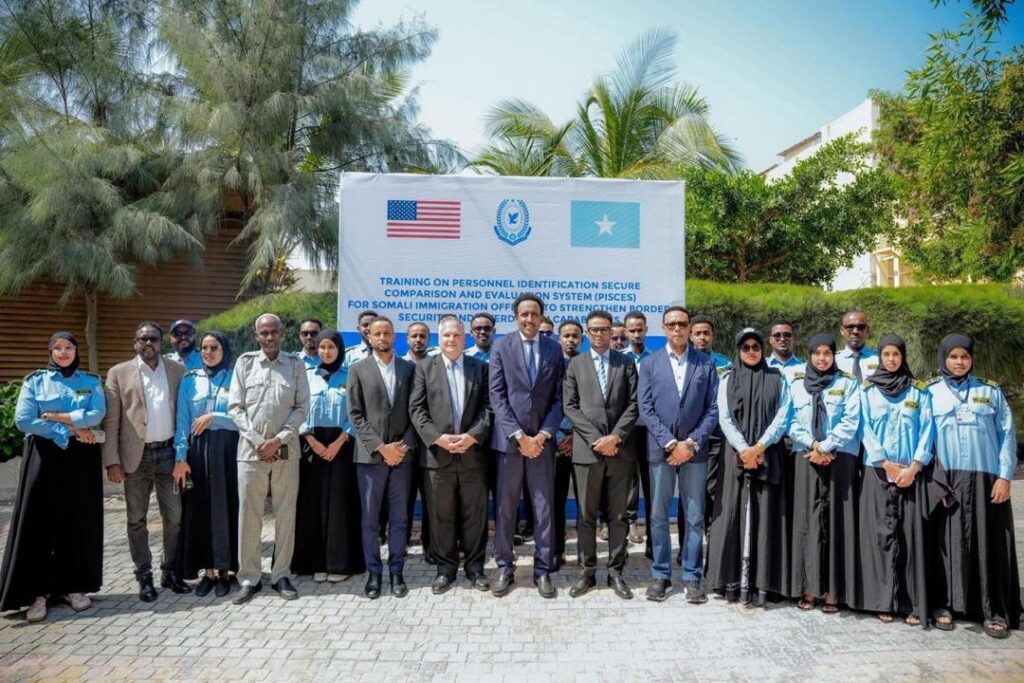
In June 2025, Somalia launched a sophisticated immigration management system known as PISCES (Personal Identification Secure Comparison and Evaluation System), marking a significant step in Somalia’s past conflict sate building endeavor toward modernizing the country’s border control and aligning with international travel security protocols. The system, which is backed by the U.S. government, was unveiled at the Aden Abdulle International Airport in Mogadishu and is now fully operational with an expectation of additional rollout across other border points in Somalia.
The project was implemented by Somalia’s Immigration and Citizenship Agency (ICA) in partnership with the United States Government, which provided not only the technology but also training and technical support. According to ICA Director General, Mustafe Sheik Ali, the PISCES system involved significant investment not only in technology but also in training personnel to utilize the system effectively. He added, that the initiative, made possible through U.S. support, marks a transformation in the way Somalia manages its immigration processes.
The Somali authorities believe that the PISCES program will be fortifying border security by streamlining immigration processes by integrating advanced biometric technology and facilitating data sharing. The PISCES enables the Somali Immigration authorities to efficiently manage immigration records electronically. The PISCES will empower officials to collect and analyze biometric data, facilitate the identification of travelers even amidst variations in their appearance or documentation.
Prior to the PISCES implementation, oversight of borders was deficient, coupled with an inadequate capacity to process immigrants. PISCES significantly enhances the screening of individuals at ports of entry, thus minimizing the risk of illegal activities, including human trafficking and smuggling. Furthermore, it plays a crucial role in mitigating potential threats related to terrorism, ensuring a more secure and efficient immigration process.
Additionally, the integration of the PISCES system with INTERPOL marks a pivotal enhancement in Somalia’s ability to address and preempt criminal activities that take advantage of its vulnerable borders. This strategic initiative not only bolsters Somalia’s internal security framework but also fosters collaborative efforts among neighboring countries, thereby strengthening regional stability. By promoting proactive measures, this advancement contributes to a safer geopolitical landscape in the Horn of Africa, underscoring the importance of collective action in tackling transnational crime.
With the backing of the United States government and a focus on capacity-building within the ICA, Somalia has taken commendable strides toward securing its borders and enhancing its immigration processes. As the system continues to develop and expand, it holds the potential to significantly improve both national security and the overall stability of the Horn of Africa, illustrating the critical importance of integrated and cooperative efforts in the face of contemporary security challenges.