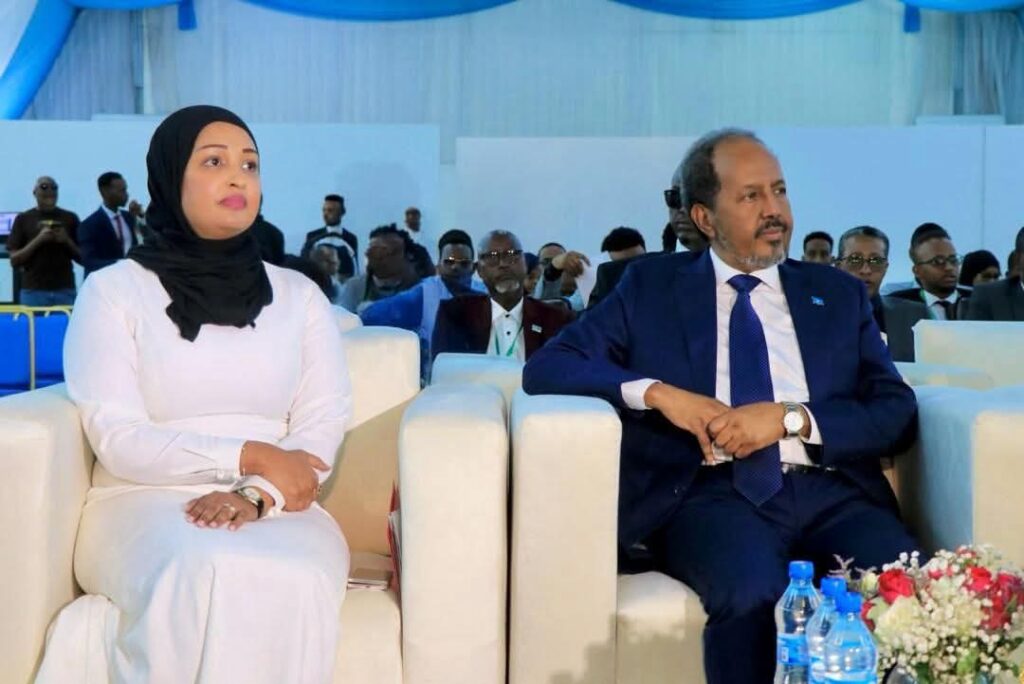
In a historic step toward institutionalizing justice and strengthening human dignity, President Hassan Sheikh Mohamud has formally signed a presidential decree activating the newly approved National Independent Human Rights Commission (NIHRC). The decree, issued after months of parliamentary scrutiny and national anticipation, officially empowers the Commission to begin its constitutional mandate of monitoring, reporting, and protecting human rights across the country.
This development marks a major milestone in Somalia’s governance trajectory and is being hailed by observers as one of the most significant reforms in the nation’s recent political history.
Completion of a Long Constitutional Process
The NIHRC’s formation follows a structured national process outlined in Somalia’s Provisional Constitution and the Human Rights Commission Act. Earlier in 2025, the House of the People approved nine commissioners nominated through an open, competitive system. In late 2025, the Senate delivered its final endorsement in a decisive session attended by 55 senators, where 28 voted in favour, and only one abstained.
With both chambers aligned, the final constitutional step, presidential assent, has now been completed. The decree grants immediate legal effect to the Commission’s establishment and authorizes it to commence national operations.
The successful establishment of the Commission would not have been possible without the steadfast leadership of President Hassan Sheikh Mohamud and the Minister of Family and Human Rights, Khadija Al-Makhzoumi. Both leaders played a decisive role in steering the process to completion, ensuring that the long-awaited institution moved from a stalled national aspiration to a fully constituted and operational human rights body. Their commitment has been widely acknowledged as a pivotal factor in turning constitutional intent into tangible institutional reality.
Somalia had long lacked a functioning, independent human rights institution capable of responding to violations, providing oversight, and serving as a bridge between the state and victims. For years, this vacuum has been repeatedly highlighted by civil society, UN agencies, and development partners as a critical gap in the country’s accountability and governance architecture.
Transitional Leadership: Dr. Mohamed Osman Elected Unanimously
Following the decree, the nine commissioners convened and unanimously elected Dr. Mohamed Osman as the Transitional Chair of the Commission. This interim leadership arrangement will remain in place until the Commission elects its permanent office-bearers: Chairperson, Deputy Chairperson, and Secretary.
Independent observers and rights experts noted that choosing Dr. Osman, unanimously and without contention, reflects a unified desire among commissioners to establish stability, credibility, and readiness during the institution’s formative phase.
Dr. Osman brings more than 15 years of professional experience in human rights, peacebuilding, sustainable development, international relations, education, and socio-economic development. His career spans work in over 40 countries across Africa, Asia, Europe, Central America, and North America, where he has served as a scholar, adviser, policy expert, and humanitarian practitioner.
His professional footprint includes extensive engagement with governments, civil society organizations, regional bodies, donor agencies, and international institutions. Analysts note that such a profile is significant for a commission expected to navigate complex domestic challenges while engaging global partners.
Why the Commission Matters for Somalia
The establishment of the NIHRC is widely described as a “turning point” for Somalia’s state-building process. For decades, efforts to strengthen human rights protections have been fragmented, largely dependent on external actors, and hampered by weak institutions and recurrent conflict.
The new Commission promises to change that trajectory by providing:
1. A National Mechanism for Human Rights Oversight
For the first time in many years, Somalia now has a constitutionally grounded, independent institution with legal authority to:
Investigate human rights violations
Monitor state compliance with national and international obligations
Engage victims and marginalized communities
Report findings to national bodies and international mechanisms
2. Strengthened National Ownership
By approving the Commission domestically, Somalia signals that human rights are a national priority — not merely an external expectation tied to donor conditionality.
3. Support and Protection for Vulnerable Populations
Millions of Somalis, including internally displaced persons, women and girls, journalists, minority groups, and persons with disabilities, have long lacked accessible avenues for redress. The Commission is expected to bring relief, visibility, and institutional protection to these communities.
4. Renewed International Confidence
External observers such as the United Nations, international NGOs, and development donors have repeatedly expressed that the absence of a national rights body hindered deeper engagement.
A recent assessment by a special expert at the Office of the High Commissioner for Human Rights (OHCHR) described the Commission’s formation as “significant progress,” while encouraging partners to strengthen technical and financial support for Somalia’s governance reforms.
Challenges Ahead: A Difficult Landscape
Despite the historic achievement, the NIHRC will begin its work in a complex human rights environment. Recent reports highlight ongoing concerns, including:
Forced evictions and land disputes
Shrinking civic space and media restrictions
Violence against women and children
Arbitrary detentions and due-process violations
Abuses by both state and non-state actors
Experts say the Commission’s effectiveness will depend heavily on whether it can operate independently, resist political interference, and secure sustainable resources.
Key priorities identified for the Commission include:
Adequate funding to sustain investigations, outreach, and monitoring missions
Clear legal protections for commissioners
Strong collaboration with civil society and community networks
Transparent communication to educate the public about rights
Institutional partnerships with regional and international mechanisms
Implications for Somalia’s Future
The Commission is set to play a transformative role in Somalia’s recovery and long-term stability. Analysts identify potential impacts in several areas:
Accountability: By documenting violations and ensuring perpetrators are held responsible
Rule of law: By reinforcing legal standards and strengthening public institutions
Justice for victims: By providing credible pathways for complaints and redress
National cohesion: By rebuilding social trust through fairness and transparency
International engagement: By demonstrating Somalia’s commitment to global human rights norms
Conclusion: A New Chapter in Somalia’s Governance Journey
President Hassan Sheikh Mohamud’s decree does more than activate an institution — it sets Somalia on a new path toward justice, accountability, and constitutional order. For many civil society groups, victims’ organizations, and international observers, the launch of the National Independent Human Rights Commission represents hope after decades of conflict and institutional fragility.
As the Commission begins its work under the transitional leadership of Dr. Mohamed Osman, all eyes will be on how effectively it can uphold its mandate, assert its independence, and serve the Somali people.
Analysts note that the Commission’s success will require unwavering political will, adequate resources, and strong public trust. For millions of citizens seeking recognition, dignity, and justice, this moment represents not just an administrative achievement, but the beginning of a long-awaited national transformation.
5 Magazine has dedicated this month’s issue to the newly established Commission, spotlighting its national significance, profiling the commissioners, and unpacking the institution’s potential impact on Somalia’s human rights landscape