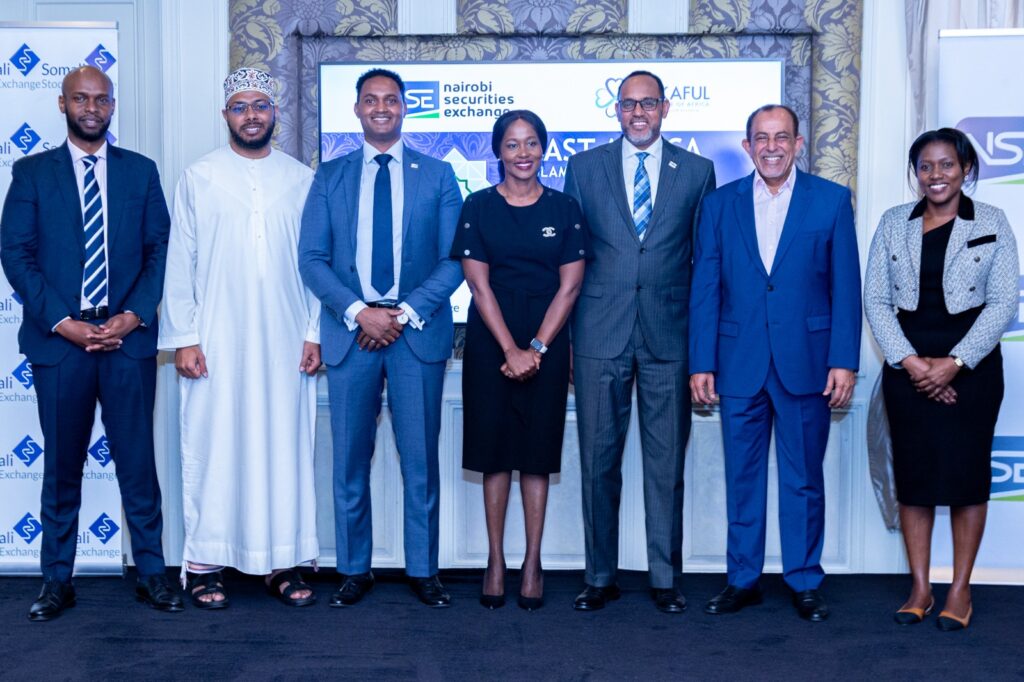
The Somali Stock Exchange (SSE) has reaffirmed its ambition to position Somalia as a regional hub for Islamic capital markets, as it successfully hosted the First East Africa Islamic Finance Forum 2025 in collaboration with the Nairobi Securities Exchange (NSE).
The landmark regional forum, held on 2–3 December 2025 in Nairobi brought together leading scholars, policymakers, regulators, investors, financial institutions, and entrepreneurs from across East Africa and beyond.
Held under the theme “Advancing Ethical Finance and Unlocking Investment Opportunities Across East Africa,” the forum focused on the growing role of Islamic finance in fostering financial inclusion, resilience, and sustainable economic growth at a time of heightened global uncertainty.
A timely conversation amid global and regional shifts
In recent years, the global economy has faced significant disruptions, ranging from escalating geopolitical tensions and trade wars among major economies to ongoing conflicts in the Middle East.
These developments, coupled with reductions in foreign development assistance, have created economic strain for many developing countries, including those in East Africa that have historically relied on external support.
Despite these challenges, Somalia and the wider East African region have demonstrated notable resilience. Strategic economic reforms, a strong entrepreneurial culture, and increasing regional cooperation continue to drive innovation and growth, even in the face of external shocks.
Within this evolving landscape, Islamic finance has emerged as a compelling and stable alternative. Globally, Islamic financial assets have expanded rapidly over the past decade.
According to the UN Economic Commission for Africa, assets held by Islamic financial institutions grew at an annual rate of nearly 25 percent, reaching USD 2.7 trillion in 2020, and are now estimated at approximately USD 4.5 trillion worldwide.
East Africa, home to a large and growing muslim population, is witnessing the early but accelerating development of Islamic finance. The number of institutions offering Islamic financial services in the region increased from 16 in 2012 to 84 by 2022.
Ethiopia leads with 23 institutions, followed by Somalia and Kenya with 19 institutions each.
SSE’s vision for regional leadership
Speaking at the forum, Hassan Dudde, Chief Executive Officer of the Somali Stock Exchange, highlighted SSE’s journey and its broader regional ambitions.
“Our journey at the Somali Stock Exchange began in 2015. We started with a single listing, grew tenfold, and we expect to replicate that growth once again,” he said. “At the Somali Stock Exchange, we recognize the vast opportunities around us. In alignment with today’s theme, we are committed to being an active part of East Africa’s ethical finance future.”
Mr. Dudde emphasized SSE’s intention to lead the development of Islamic capital market products across the region, noting Somalia’s strong foundations in Shariah-compliant finance.
“We want to position our organization as a regional leader in Islamic capital market products. Somalia has one of the most vibrant Islamic finance markets in East Africa. Nearly all our banking products are Shariah-compliant, and our institutions are increasingly recognized across the region. This forum gives us the opportunity to elevate our voice and demonstrate our value,” he added.
He further stressed the importance of cross-border collaboration, calling for closer cooperation among governments, regulators, and market participants.
“As East Africa’s business landscape continues to open, we have a responsibility to shape the narrative and ensure Islamic finance becomes a driver of investment, economic inclusion, and long-term development. Whether through shared standards, joint investment programs, or regional sukuk frameworks, the potential before us is immense.”
Islamic Finance as a Strategic Pillar of Growth
Participants at the forum explored how Islamic finance can move beyond being an alternative financial model to becoming a strategic pillar of regional growth. Discussions focused on harnessing halal financial products to support infrastructure development, small and medium-sized enterprises, and cross-border investment.
The forum featured high-level panel discussions, technical presentations, and extensive networking opportunities, covering key areas such as Islamic banking and finance, Islamic capital markets, and takaful (Islamic insurance). A core objective was to engage regulators, investors, and financial institutions in meaningful dialogue and propose practical solutions for scaling Islamic finance across East Africa.
The event also aimed to strengthen financial and investment ties between East Africa and the Middle East, recognizing the shared opportunities and complementarities between the two regions.