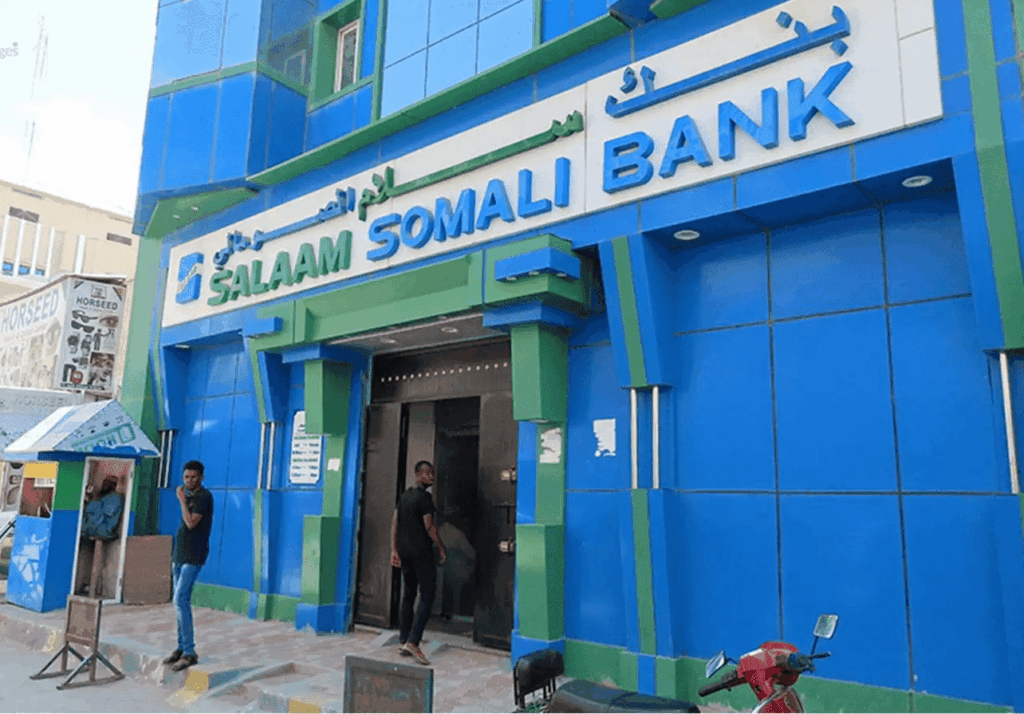
Founded in 2009 as Somalia’s first privately owned commercial bank and regulated by the Central Bank of Somalia, Salaam Somali Bank has become a central pillar in the country’s financial renewal. Offering personal, business, and diaspora banking services grounded in Islamic finance, the institution has steadily expanded access to formal banking, mobile financial services, and Islamic microfinance, supporting thousands of entrepreneurs and community initiatives nationwide. In an economy rebuilding from decades of disruption, the bank’s approach blends ethical finance with practical tools for inclusive growth.
Sharia-Compliant Investment at the Core
At the core of its operations is Sharia-compliant business investment, a system that prohibits interest (riba) and instead promotes asset-backed and profit-sharing relationships. Rather than operating as a conventional lender, the bank structures financing through instruments such as Musharakah, a joint-venture partnership in which profits and losses are shared; Mudarabah, where one party provides capital and the other manages the enterprise for a share of profit; Murabaha, a cost-plus asset-financing arrangement; and Ijarah, a leasing-based model. These mechanisms ensure compliance with Islamic law while enabling genuine commercial activity, enterprise expansion, and long-term investment.
Ethical Financing Transforming Small Businesses
The practical impact of these principles is evident in the financing tools available to entrepreneurs. As Abdihakim Mohamud explains, “Salaam Somali Bank offers substantial sharia-compliant financing, which many Somali people have benefited from. Among these is Qardul-Hasan, which is a financing system offered by the bank where it does not charge any profit and which is also designed for small entrepreneurs to encourage the growth and development of their businesses.”
Within this partnership-driven framework, the bank supports both new and existing enterprises through Musharakah and Mudarabah structures that provide capital, managerial guidance, market linkages, and fair ownership arrangements, positioning the institution not merely as a financier but as an active participant in enterprise development.
For customers, this ethical financing model translates into a real opportunity. “As an entrepreneur dealing in pharmaceuticals, I would like to thank Salaam Somali Bank. I have taken the Qardul-Hasan financing several times. They lend a very strong hand to small business traders. Subsequently, these small businesses repay the loan’s principal without any added profit margin,” says Dr. Mulki Ibrahim, a customer of the bank.
Such experiences illustrate how interest-free financing can nurture grassroots commerce while preserving affordability, dignity, and trust between financial institutions and the communities they serve.
Beyond individual financing, the bank has expanded its developmental reach through a five-million-dollar entrepreneurship fund established in collaboration with Hormuud Telecom. Targeting youth-led ventures in technology, renewable energy, agriculture, fishing, and livestock, the initiative reflects a strategic commitment to innovation, employment creation, and inclusive participation in Somalia’s emerging economy. By directing capital toward productive sectors, the bank reinforces its role as an investment partner in national growth rather than a traditional credit provider.
Additional Sharia-compliant services extend this philosophy across personal and commercial finance. Flexible repayment structures, alongside home and construction financing arranged through Murabaha or Istisna contracts instead of interest-based loans, ensure that ethical risk-sharing principles remain consistent throughout the bank’s product portfolio. The cumulative result is a financial ecosystem defined by fairness, transparency, and real-sector engagement, key foundations for sustainable development.
Building Knowledge Through the Salaam Training Center
Education and capacity building form another pillar of the bank’s long-term vision. To deepen public understanding of Islamic finance and strengthen professional competence, Salaam Somali Bank established the Salaam Training Center, delivering structured learning programs, workshops, and expert-led courses for financial practitioners, students, and community members.
Reflecting on this initiative, Abdihakim Mohamud notes: “To enhance financial understanding and competence of the Somali people in accordance with Islamic Sharia, the bank created The Salaam Training Center to offer the Somali public training focused on the institution’s operational financing models. A substantial number of individuals have benefited from the training offered by the Salaam Training Center, who came from different segments of society, such as entrepreneurs and university students.”
Such training not only equips individuals with practical knowledge of Sharia-compliant governance, regulatory standards, and ethical investment models but also strengthens professionalism across the wider financial sector. Specialized courses addressing compliance, operational standards, and contemporary Islamic banking practices demonstrate collaboration between training providers and financial institutions, helping build credibility, technical expertise, and long-term institutional stability in Somalia’s evolving economy.
Investing in Infrastructure and National Recovery
The bank’s developmental footprint extends further into real estate and infrastructure, sectors closely tied to national recovery and improved living standards. By investing in projects designed to stimulate urban renewal, generate employment, and enhance quality of life, particularly in the capital, the institution positions finance as a driver of social transformation.
Emphasizing this broader mission, Abdihakim Mohamud states: “Overall, we play a key role in Somalia’s reconstruction and national development. The Bank developed a mixed-use residential and recreational area in the capital.”
Global Recognition and International Standards
International recognition has accompanied this domestic impact. Salaam Somali Bank consistently adheres to international financial standards and became the first Somali bank to receive ISO 9001:2015 certification, signaling a strong commitment to quality management and operational excellence.
According to Mohamed Hussein, “Salaam Somali Bank is featured in international forums, where it has successfully won awards in some of them, and it endeavors to link our country’s commerce with international markets. In addition, Salaam Somali Bank has won awards and certificates in recognition of its status as the bank that provides comprehensive Islamic financial services. Secondly, the best Islamic bank in Africa. Thirdly, for safeguarding the trust that the community entrusted to it.” These distinctions enhance the bank’s global credibility while helping connect Somalia’s commercial landscape to international opportunity.
Taken together, the institution’s achievements reveal more than the growth of a single bank; they reflect a broader narrative of ethical finance powering national renewal. Through Sharia-compliant investment, entrepreneurship funding, professional training, infrastructure development, and adherence to global standards, Salaam Somali Bank demonstrates how faith-aligned finance can operate as a practical engine of reconstruction and inclusive prosperity.