By: Ilham Ali Gassar
Last week, I stood at the centre of a moment that I know will stay with me for a long time.
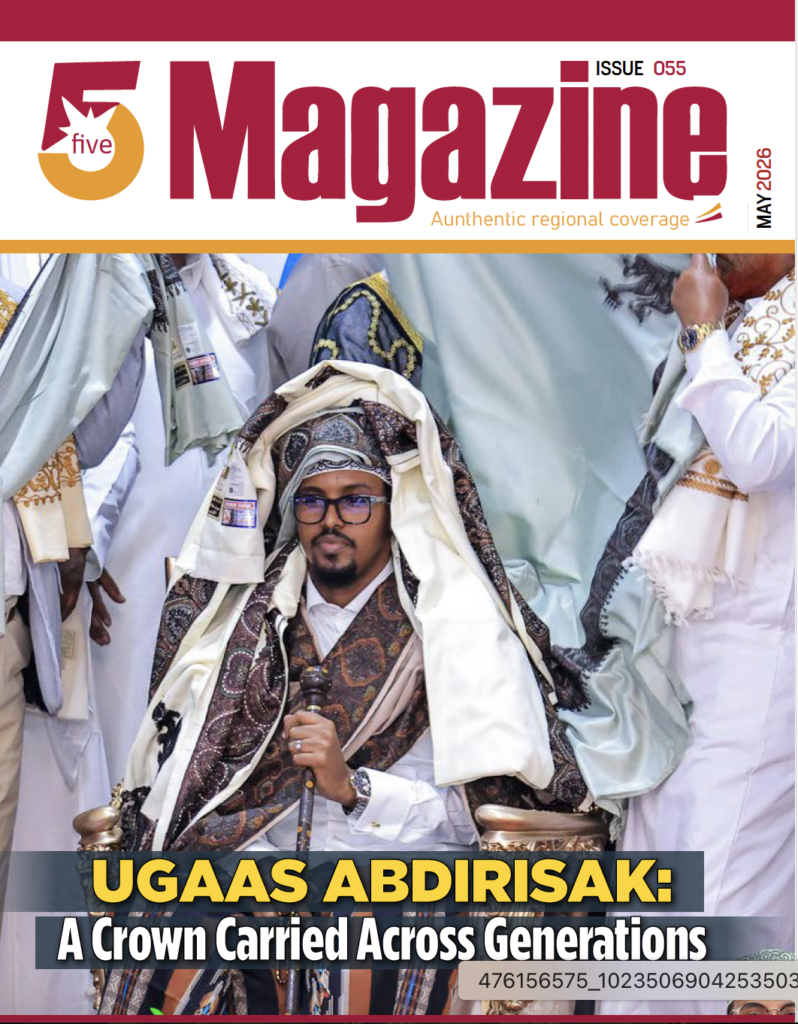
I had the privilege of leading a team of 70 remarkable volunteers to organise and deliver the coronation of Ugaas Abdirizak Ugaas Abdullahi Ugaas Hashi Ugaas Fara’Adde as Chief Traditional Leader of the Murusade clan. What began as an ambitious undertaking quickly became something far greater, a national moment that revealed the true depth of Somalia’s unity.
It was not easy.
For weeks, we worked under intense pressure, long days that blurred into nights, constant coordination, and the weight of expectation. The venue itself was built from the ground up, brought to life through the dedication and precision of Fathi Events and the wider team. What stood on that day was not just a physical space, but a carefully constructed environment designed to carry meaning, dignity, and scale. Behind the scenes, the structure of the effort reflected the very balance we were trying to achieve.
We operated through a two-tier system.
The first tier, the Council of Elders, carried the cultural authority of the event. They were responsible for engaging elders across regions, managing invitations within traditional structures, and ensuring that every aspect of the ceremony respected Somali customs and cultural protocols. Their role was not just organisational; it was foundational. They ensured the event remained authentic, grounded, and legitimate in the eyes of the communities it represented.
The second tier, the political and operational structure, focused on ensuring inclusivity at the national level. This included Ministers, Members of Parliament, members of the East African Legislative Assembly, former Prime Ministers, and former Ministers. It was about ensuring that every political stakeholder, regardless of alignment, felt included in the moment.
I worked within this second tier, leading a team of 70 volunteers who became the engine behind the delivery. Together, we carried responsibility for event management, protocol, both within and outside the venue, logistics, catering, media coordination, and security. We ensured elders were received with dignity, transported from their hotels to the venue, and properly accommodated throughout. We worked closely with the Office of the President and the Prime Minister’s protocol teams to ensure a seamless blend between cultural protocol and state protocol, two systems that do not always naturally align, but on this occasion, had to move as one.
We also coordinated with the Ministry of Foreign Affairs protocol team to ensure that foreign diplomats were appropriately received and integrated into the event, recognising the broader regional and international significance of the moment.
It was exhausting. There is no other way to describe it. But it was also, without question, the opportunity of a lifetime. Because when the day arrived, what unfolded was something extraordinary. Somalia, in all its complexity, came together. The President stood there. The Prime Minister was present. The Speakers of Parliament took their place.
Alongside them were former Presidents and former Prime Ministers, leaders who have shaped the country across different periods, often from opposing political positions. Government and opposition figures sat within the same space. Elders travelled from all five regions of Somalia, each bringing their authority, their voice, and their history.
For a country often defined by its divisions, this was not a small thing. And yet, what struck me most was how natural it felt. There was no sense of performance. No forced unity. Just presence.
As I moved through the venue, checking final details, responding to inevitable last-minute challenges, I kept pausing to observe what was happening around me. Leaders in quiet conversation. Elders seated with a calm, unquestioned authority. Young volunteers moving with focus and pride, aware that they were part of something meaningful.
It was in those moments that I understood something more deeply than I had before. Somalia is not held together by politics alone. It is held together by culture. This experience taught me lessons that no formal setting could.
I learned the meaning of tradition not as something static, but as something lived and actively shaping how we relate to one another. I learned patience, the kind required to navigate different expectations, protocols, and personalities without losing sight of the bigger picture. I witnessed what I can only describe as the supremacy of culture, its ability to override division, to command respect across political lines, and to create unity without force. And above all, I felt a profound sense of belonging.
One of the most powerful personal moments for me was meeting elders from the Somali region of Ethiopia, individuals I had only ever heard about in stories. Among them was Garad Wiilwaal, whose presence carried history, continuity, and connection beyond borders. It was a reminder that Somali identity does not sit neatly within political boundaries. It is broader, deeper, and more enduring. And that is where this reflection extends beyond Somalia.
As a Member of the East African Legislative Assembly, among the first to represent Somalia in this regional space, I find myself thinking about what this moment offers the East African Community. Across our region, we are navigating similar challenges: political fragmentation, contested legitimacy, and the ongoing effort to build trust between institutions and citizens.
Too often, we look only to formal systems for solutions. But what I witnessed during this inauguration tells a different story. It shows that unity is not always negotiated; it can be rooted. It shows that legitimacy does not only come from office, but it can also come from culture. It shows that integration is not only built through policy, but it is built through shared identity and lived experience.
The coronation was not simply ceremonial. It was connective. It created a space where political differences softened, where presence became dialogue, and where culture provided the framework for unity.
For the East African Community, this is an important lesson.
If regional integration is to be meaningful, it must go beyond institutions. It must recognise and engage with the cultural systems that people trust, respect, and identify with. It must create space for voices that operate outside formal political structures but carry deep legitimacy within communities.
Somalia brings that perspective. We bring lived experience in navigating complexity. We bring an understanding of how culture can hold a nation together when politics struggles. We bring proof that even at moments of division, unity is still possible.
Last week, I did not just help deliver an event. I witnessed what Somalia looks like when it leans into its strengths. A country divided by politics, yes, but undeniably united by culture. And that is not just our story. It is a lesson the entire region can learn from.
By: Ilham Ali Gassar
Member of Parliament of the East African Community, Head of Protocol, and Member of the Organising Committee of the Event.