“Somalis, help me help you.” – President Ismail Omar Guelleh
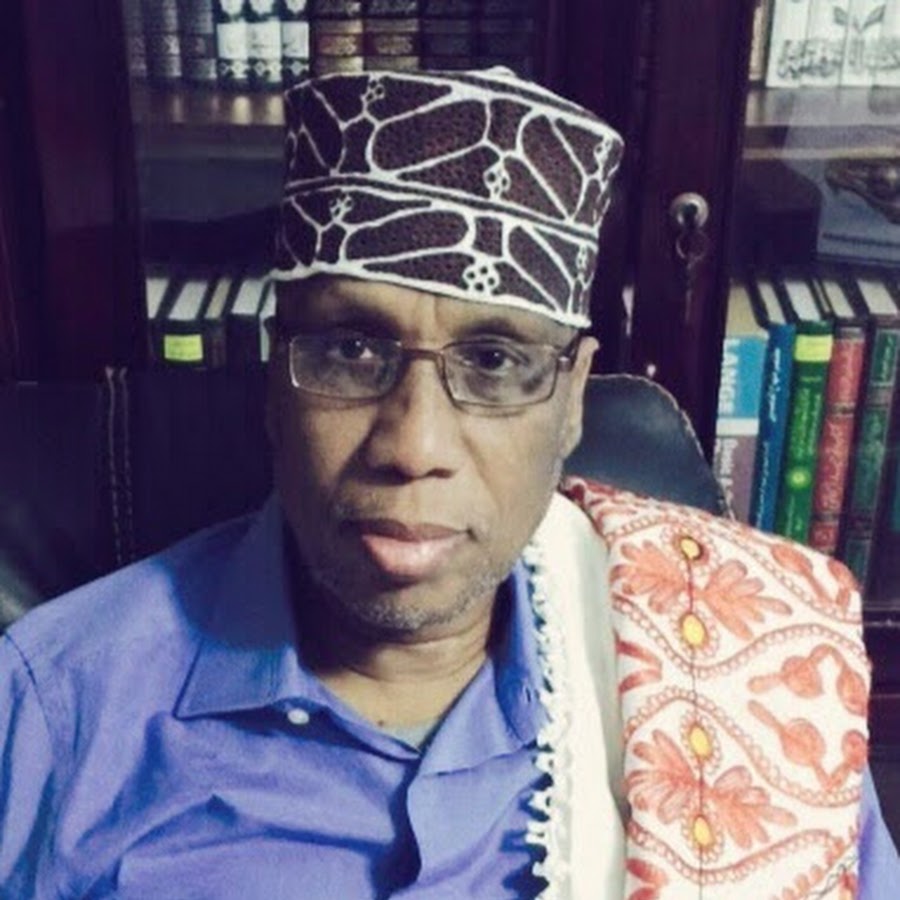
Dr. Ibrahim Dazuqi is a seasoned Somali scholar who has lived through many of the defining moments in Somalia’s modern history. As the country marks the 25th anniversary of the Arta Conference, the 2000 peace talks in Djibouti that gave birth to Somalia’s first government after state collapse, Dr. Ibrahim reflects on the events leading up to that pivotal meeting and shares little-known details from his firsthand experience.
The Spark That Lit the Arta Process
According to Dr. Ibrahim, speaking in a detailed interview with the program Dhaxalreeb, the Arta process was preceded by a decade of failed attempts to unite Somalia’s warring factions. “For ten years,” he recalled, “different efforts were made to bring together the Somali rebel groups, but none of them agreed to form a government.”
He explained that the idea which eventually led to the Arta Conference came from a new approach: instead of focusing solely on warlords, the peace effort would center on ordinary Somalis, intellectuals, elders, and civil society leaders, who had the country’s interests at heart.
Dr. Ibrahim repeatedly emphasized that the vision of rebuilding a Somali government was a mission personally championed by President Abdiqasim Salad Hassan, who never abandoned that goal. In 1995, the two men met after Dr. Ibrahim was invited to see him. Alongside Abdikarim Hussein Guled (who would later hold several senior government posts), they took President Abdiqasim on a visit to schools they had established. “We changed the schools’ names to Islamic ones,” he said, “because we wanted the next generation to be educated and free from tribalism.”
Following that, President Abdiqasim argued that Somalia could not wait for schools alone to shape the youth; intellectuals had to come together to prevent the nation from tearing itself apart.
“With him as our leader,” Dr. Ibrahim recounted, “we began in 1995 to gather Somalis to discuss how to rebuild a government. We met at a house we owned in KPP (Hodan district). The numbers grew daily. Eventually, I became busy, and he left for Cairo.”
In 1998, Abdiqasim once again called Dr. Ibrahim and Dr. Badiyow. “He told us,” said Dr. Ibrahim, “‘Let’s save our nation.’ He lived in Taleh and started organizing meetings from there. Though it didn’t progress far, he never gave up on the cause.”
Later, Abdiqasim, along with Mohamed Nur Galal and Abdi Farah Jama, approached President Mohamed Haji Ibrahim Egal of Somaliland, asking him to lead efforts to save Somalia. Egal declined.
“I don’t believe the claim that Egal was willing but was sidelined,” Dr. Ibrahim explained. “Egal was not a man you could sideline. He simply realized it wasn’t practical or promising.”
Djibouti and President Guelleh Steps In
The next step came in 1999, when Djibouti’s President Ismail Omar Guelleh agreed to sponsor the Somali peace process. Tasks were divided among various actors. “They returned to Mogadishu and began engaging elders in discussions. President Ismail took charge of the political arrangements, consulted with IGAD, and was entrusted with leading the process,” Dr. Ibrahim said.
At the time, Puntland and Somaliland already had their own administrations, and they were directly consulted on whether they would participate. In what is now the South West State, the RRA (Rahanweyn Resistance Army) was dominant, but Baidoa was under the control of the SNA forces. To ensure the talks proceeded peacefully, the SNA was persuaded to withdraw from Baidoa so the RRA wouldn’t feel pressured. Meanwhile, clans in central Somalia were not yet unified under any single administration, so they agreed to coordinate and send joint representatives. “Meetings were held daily,” he recalled. “There wasn’t a single day without progress.”
Dr. Ibrahim also recalled the active role of the Islah movement, of which he was a member. “We agreed to actively contribute to the state-building efforts,” he said. A three-member organizing committee was appointed: himself, Abdikarim Hussein Guled, and Abdi Mohamed Abtidon. “Dr. Badiyow was among the senior leaders overseeing our work. We were responsible for mobilization.”
The process lasted a year and was extremely difficult. “We were fought by the militias and resisted by tribal leaders,” he said. “Some wanted the conference organized along clan lines. That created tension. But our vision spread quickly.”
Within their team, two competing ideas emerged: one from Abdiqasim and one from Dr. Ibrahim himself. “Abdiqasim argued that Somalis could only be led through their clans, each clan through its own figure. I believed instead in finding credible, respected people who could be accepted by all. We clashed over this often, but in the end, my approach prevailed because the challenges forced it. The elders were our foundation; none refused us, but uniting all clans under one agreement was the hardest part.”
When preparations neared completion, Dr. Ibrahim said there were attempts by some to take over the process, “but the elders resisted. The conference was finally held, and all the hardship paid off. The most important achievement was securing a consensus to hold the talks in Arta, and we succeeded.”
Before the conference began, Djibouti sent Osman Gureys to assess Somalia’s situation and whether a government could realistically survive. At the time, local clan courts were mediating disputes and maintaining peace. Gureys was impressed and reported back that such grassroots justice systems could support a new state. This led to many court representatives being included in the transitional parliament.
Inside the Spirit of Arta
Interestingly, President Guelleh first learned of Dr. Ibrahim through an article he wrote in Al-Mujtamaa, a Kuwaiti journal, discussing Somali state-building. “The president read it and asked, ‘Who is this man with such ideas? We should find him.’ That’s how I was invited to Djibouti,” Dr. Ibrahim recalled.
At the Arta Conference of Somali Intellectuals, participants debated one key question: What foundation should a Somali government be built upon? Three ideas emerged: a clan-based system (4.5 formula), a district-based model, and a civil society-based model.
Dr. Ibrahim clarified that the 4.5 system was not invented in Arta. It actually originated earlier under President Siad Barre, who had formed a committee called Suluh during the war years and based it on that formula. “That’s the earliest I heard of it,” he said.
Eventually, the 4.5 model was adopted because, as he explained, “Somalia was fragmented. You couldn’t select leaders purely on merit, as during the SYL days, because people no longer knew each other. The only functional social unit left was the clan.”
Still, he described the atmosphere in Arta as deeply Somali and unifying. “The Djiboutians were incredible,” he said. “Beyond the hospitality everyone mentions, they organized patriotic songs, plays, and cultural events inside the tents, all urging people to abandon clan divisions and embrace unity. Once there, no one opposed forming a government; the debates were only about the structure and process.”
He said the Djiboutians often sought his advice on whom to consult and how to manage discussions. “They didn’t always know the Somali intellectual landscape, so I’d rely on the clan-based 4.5 framework to identify credible people to recommend.”
When asked whether warlords were excluded from the conference, he replied, “No one was barred. Some simply chose not to come. Had they come, they would have been welcomed like everyone else.”
On whether Arta’s success might have prevented later reconciliation talks in Mbagathi, Dr. Ibrahim said, “Without Arta, there would have been no Mbagathi. Arta created the foundation and legitimacy that made Mbagathi possible.”
He believes that even if warlords had attended Arta, they wouldn’t have derailed it: “The real power lay with the elders. The warlords could either join in or stay out.”
From Arta to Government
The conference concluded successfully in August 2000, electing President Abdiqasim Salad Hassan as Somalia’s head of state. Later, President Guelleh suggested that Abdiqasim travel to Mogadishu to demonstrate to the world Djibouti’s influence and commitment to Somalia.
“The welcome he received in Mogadishu was unlike anything ever seen,” Dr. Ibrahim recalled. “We later went to Baidoa, where the reception was just as warm. Back in Djibouti, a prime minister was appointed, Ali Khalif Galaydh, and the government was formed. Some factions joined; others did not.”
Over time, government forces clashed with militias, and eventually the government weakened. “When the 9/11 attacks happened, the Americans told President Abdiqasim directly that his government was linked to terrorism and withdrew recognition,” he said.
According to Dr. Ibrahim, the government collapsed for several reasons: “Lack of funding, fighting with internal militias, the closure of ports and airports, and finally, international isolation.”
Twenty-Five Years Later
Reflecting 25 years later, he insisted: “The Arta Conference achieved its main goal—to rebuild a Somali government.”
He added that after the government’s formation, he wrote an article urging Somalis to support it financially and morally: “A government must provide security and livelihoods. Twenty-five years since Arta, Somalia is still struggling with security and has yet to achieve real development.”
Lessons from Arta
Dr. Ibrahim believes the lessons of Arta remain timeless: “No matter how great the hardship, perseverance pays off. The conference nearly collapsed several times, but President Guelleh showed extraordinary determination. Djibouti had no external backers and bore the entire cost. When everyone thought the talks had failed, Guelleh said, ‘Somalis, help me help you.’ Everyone burst into tears.”
He concluded that Arta also taught that people of common culture and history can reconcile, and that self-reliance is key: “For ten years, other countries manipulated Somali warlords, keeping us divided. Arta was different; it was a Somali-led project under a leader who felt Somali at heart.”
In his final words of advice to young people, he said:
“People of my generation have lived our time. Take what was good from us and leave what was bad. If we keep clinging to clan, we’ll never build a nation. To have a state, we must outgrow tribalism and embrace nationhood.”
To today’s leaders, he added: “A government cannot exist without two things: integrity and competence. Be honest, and bring in capable people. Without these, we’ll fall back into collapse.”