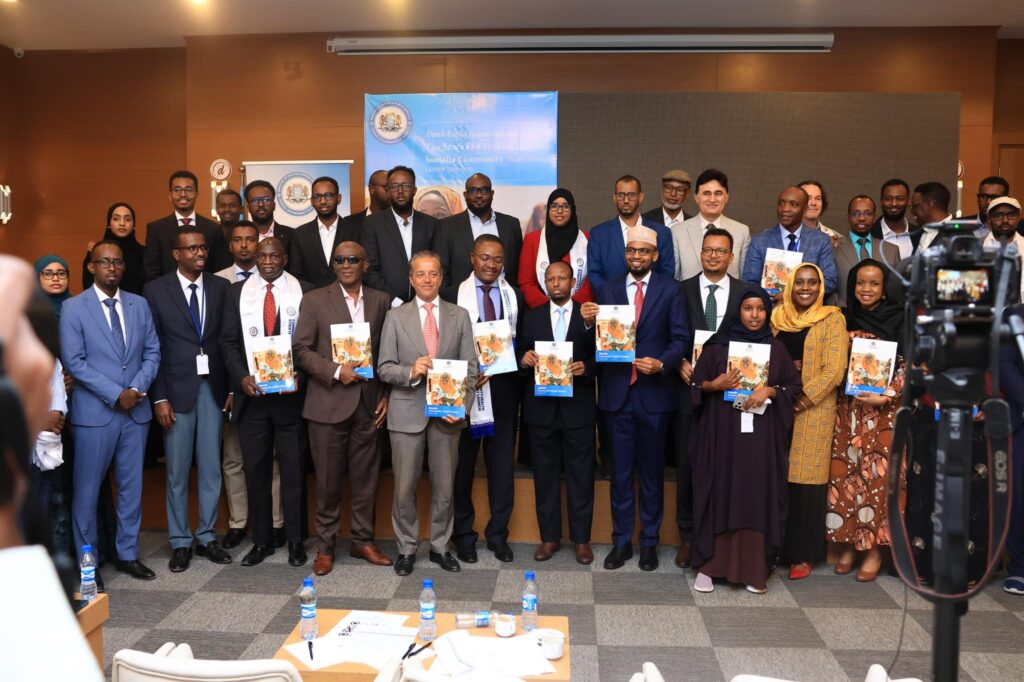
The Federal Government of Somalia has officially launched the Somalia Community Health Strategy 2025–2029, a major new policy aimed at strengthening primary healthcare and building a more resilient national health system.
The strategy seeks to address some of Somalia’s most pressing health challenges, including high maternal and child mortality, widespread malnutrition, low immunization coverage, and recurring disease outbreaks such as polio and measles.
According to the joint press release issued by the Federal Ministry of Health and Human Services, UNICEF, WHO, and Africa CDC, the new plan will expand maternal and newborn care, improve the early detection and treatment of childhood illnesses, scale up nutrition services, boost immunization outreach, and strengthen community-based disease surveillance.
The strategy was developed under the leadership of Somalia’s Ministry of Health in partnership with UNICEF, WHO, the World Bank, the Global Fund, Africa CDC, civil society groups, and community representatives. It aims to establish a harmonized national community health system led by a professionalized workforce of Female Health Workers (FHWs) trained and certified to deliver essential services directly to households.
Minister of Health and Human Services Dr. Ali Haji Adam Abubakar described the launch as the beginning of a new chapter for Somalia’s health sector.
“For too long, community health in Somalia has been fragmented,” he said, adding that the new strategy will unify community health cadres under one system and ensure that even remote households have access to accountable and quality health services.
Africa CDC Director General Dr. Jean Kaseya said Somalia’s move demonstrates that even in complex settings, it is possible to build resilient, equitable, and government-led health systems. He noted that Africa CDC will continue supporting Somalia through technical assistance and peer learning.
WHO Representative in Somalia Dr. Kamil Mohamed Ali said the strategy reflects one of the core principles of primary healthcare: delivering essential services to people where they live. He added that community health workers are often the first and most consistent link between families and the health system.
UNICEF Somalia Officer in Charge Nisar Syed also welcomed the new strategy, saying investment in community health is one of the most powerful ways Somalia can improve the wellbeing of children and families. He said UNICEF will continue to support the government in bringing essential services closer to communities.
Officials say the strategy represents a major step toward building a people-centered health system capable of reaching every Somali household, while also supporting long-term institutional development and sustainable domestic financing for community health services.