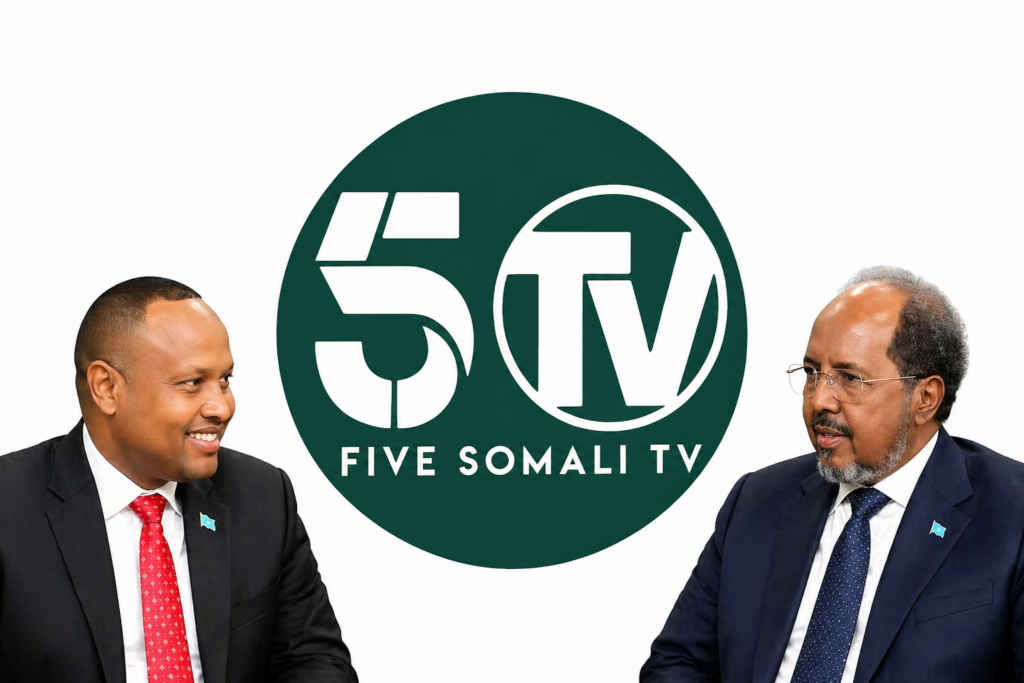
By 5TV Editor
The resignation of a senior presidential adviser Abdullahi Mohamed Nur in Mogadishu rarely passes as a routine administrative change.
In Somalia’s fragile political climate, it is often a signal, subtle or otherwise, that deeper fractures are widening beneath the surface. This week’s departure from Villa Somalia, at the heart of the administration of Hassan Sheikh Mohamud, feels less like a personal decision and more like a warning flare.
The adviser Abdullahi Mohamed Nur did not cloak his concerns in diplomatic ambiguity. He pointed directly to “serious political challenges and deadlock” and cautioned that the country could slide into renewed instability.
In a political environment where words are often carefully rationed, such candor is striking. “We are approaching a cliff if consensus is not urgently reached,” he told local media.
Adding: “The nation cannot afford another cycle of uncertainty driven by delayed decisions and competing mandates.”
That warning lands heavily given Somalia’s history. Political instability in Somalia, and particularly in Mogadishu, has rarely been abstract. It has played out in missed elections, disputed mandates, and at times, outright violence. The 2021–2022 electoral crisis, for instance, saw armed clashes erupt after disagreements over delayed polls and term extensions. Earlier, in 2017, tensions surrounding the indirect electoral process led to security lockdowns and fears of insurgent exploitation. Even further back, the post-transitional period of 2012 brought uncertainty as new federal institutions struggled to assert legitimacy amid persistent threats from Al-Shabaab.
Against this backdrop, the adviser’s resignation feels less like an isolated act and more like part of a familiar pattern: political stalemate giving way to elite fractures, followed by heightened public anxiety.
The timing only sharpens the concern. With the mandates of key federal institutions set to expire on May 15, and no clear, agreed-upon path forward, Somalia once again finds itself navigating the dangerous space between constitutional deadlines and political reality.
What makes this moment particularly precarious is not just the disagreement itself, but the erosion of trust it suggests. When insiders begin to step away and speak openly about their reasons, it often reflects deeper dysfunction within the governing circle. Villa Somalia’s silence so far does little to reassure observers that the situation is under control.
Somalia has, time and again, demonstrated resilience in the face of political turmoil. But resilience is not immunity. Each cycle of instability carries consequences for security, governance, and public confidence.
The adviser’s promised forthcoming proposals may offer a roadmap, but whether they are heeded is another matter entirely.
For now, his departure serves as both a symptom and a signal.
Somalia is approaching the political season and the cost of miscalculation could be far higher than its leaders can afford.