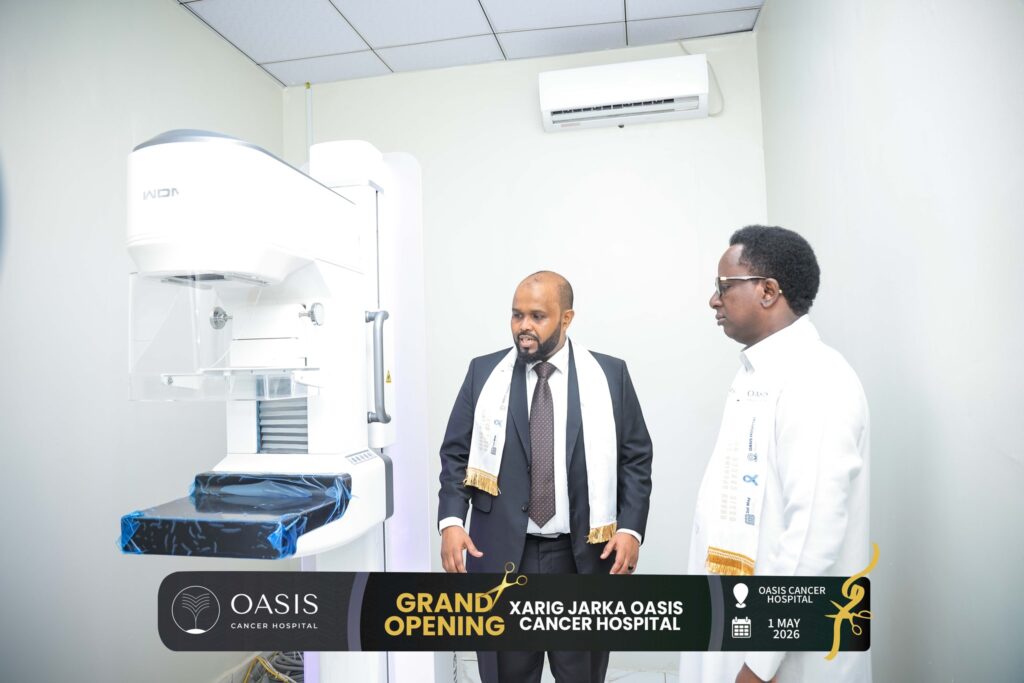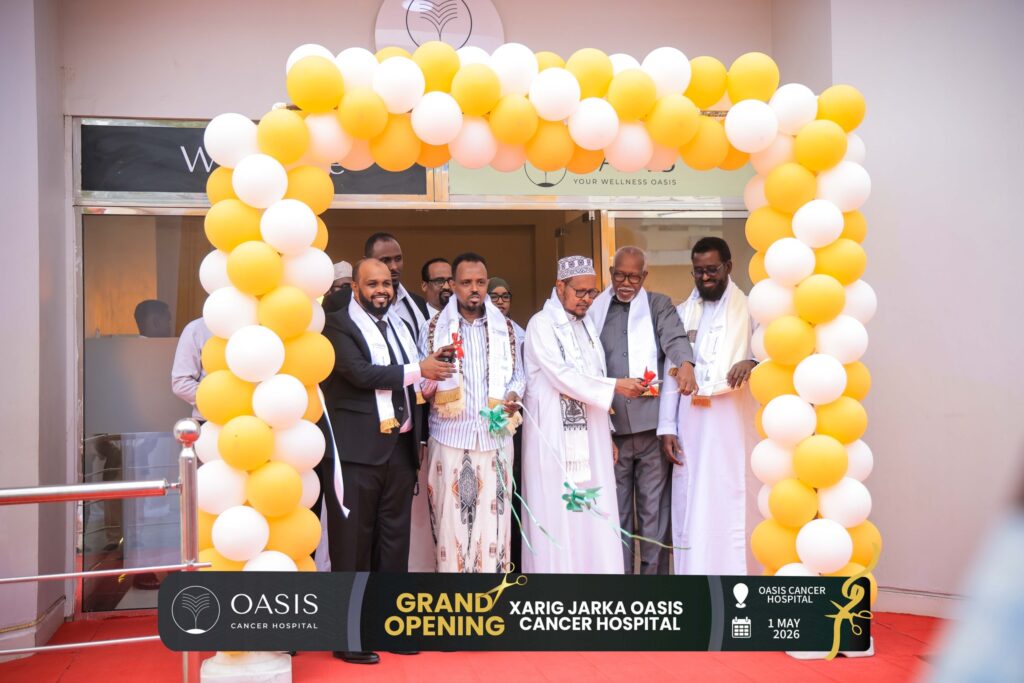
Somalia has taken a significant step in rebuilding its healthcare system following the official inauguration of Oasis Hospital, a newly expanded medical facility in the capital, Mogadishu.
The hospital was previously known for its specialization in cancer treatment. It has now broadened its scope to offer a range of essential services, including general medicine, orthopedics, ear, nose and throat (ENT) care, as well as maternal and child health services.
The launch ceremony drew senior government officials, members of the medical community, and representatives from across Somali society, reflecting the importance attached to improving access to quality healthcare in the country.
Speaking at the event, Deputy Minister for Information Abdirahman Al-Adala described the facility as a milestone in Somalia’s recovery. “This hospital is a clear sign that Somalia is investing in its people, not just through policy, but through tangible services that directly impact lives,” he said.
For years, many Somalis have been forced to travel abroad to seek specialized treatment, often at significant financial and emotional cost. Kenya, in particular, has been a key destination for such patients. Officials say the expansion of facilities like Oasis Hospital could help reduce that dependence.
Deputy Governor for Security of Banadir Region Mohamed Diiriye Yabooh emphasized the broader impact of the new hospital, noting that it represents a shift toward self-reliance. “We are working toward a future where our citizens no longer feel compelled to leave their country for essential care,” he said. “This hospital is part of restoring that confidence in our national institutions.”
The development also highlights the growing role of local investment in Somalia’s social sectors. In a country long associated with reliance on international aid, the establishment and expansion of Oasis Hospital signals increasing domestic capacity to deliver critical services.
Healthcare experts note that improved medical infrastructure could have ripple effects across the region, easing pressure on neighboring countries while contributing to stronger regional health systems.
Despite the progress, challenges remain. Somalia continues to face shortages of trained healthcare workers, limited medical supplies, and gaps in access to services in rural areas.
However, officials and stakeholders at the launch expressed optimism that projects like Oasis Hospital represent incremental but meaningful progress.
As Somalia continues its path toward recovery, the new facility stands as both a practical addition to the country’s healthcare network and a symbol of its broader efforts to rebuild essential public services.