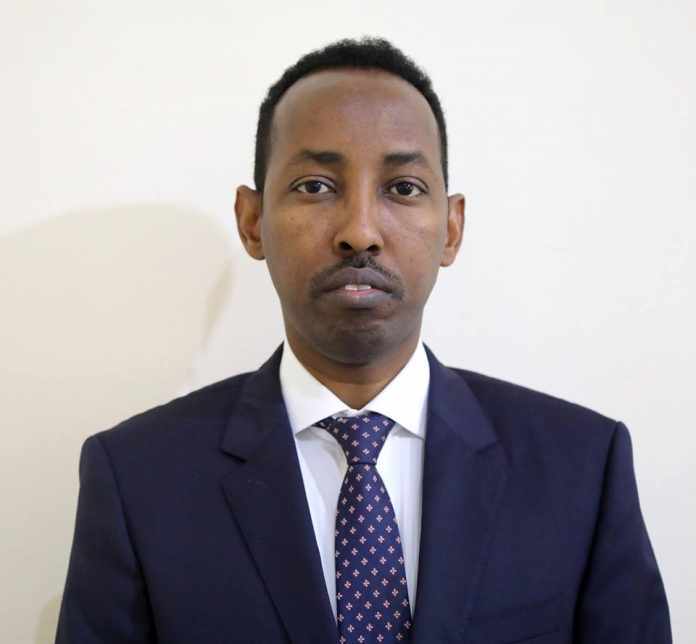
The appointment of Hussien Kasim Idow as Somalia’s new Director General of the Immigration and Citizenship Agency marks a significant moment in the country’s ongoing effort to strengthen governance, security, and regional integration. His nomination by the Ministry of Internal Security, approval by the Council of Ministers, and confirmation by Parliament underline the weight attached to this role in shaping Somalia’s future mobility and border management systems.
Iidow takes over from Mustaf Dhuhulow at a time when the agency sits at the heart of Somalia’s most sensitive national priorities, security control, identity management, and regulation of human movement across its borders and airports. His previous experience as Minister of Presidency in Galmudug between 2015 and 2017 gives him a grounding in governance within complex political and security environments, a skill set he will need in abundance.
The Immigration and Citizenship Agency is not merely an administrative office. Rather, it serves as a frontline institution in Somalia’s national security architecture. It oversees passport issuance, border regulation, and monitoring of cross-border movement through key entry points with Kenya, Ethiopia, and Djibouti, alongside air travel. In a region where porous borders can easily be exploited by criminal networks, extremist groups, and trafficking syndicates, the importance of a well-functioning immigration system cannot be overstated.
This appointment also comes at a pivotal moment as Somalia continues to reposition itself economically and politically within the region following its admission into the East African Community. The promise of freer movement of people, goods, and services across the bloc presents both opportunities and risks. While integration will boost trade, labour mobility, and investment, it also demands stronger systems to ensure that human movement is legal, documented, and secure.
It is within this context that Somalia must urgently get the regulation of human traffic right. The challenge is not only about efficiency in issuing passports or easing travel procedures, but also about ensuring robust vetting systems, reliable identity verification, and coordinated border intelligence. Without these safeguards, openness can quickly become vulnerability.
Idow’s success will depend on whether Somalia can build an immigration system that is both open and secure, one that supports regional integration while firmly controlling illicit human movement. For Somalia, and indeed the wider Horn of Africa, getting this balance right is no longer optional; it is essential.