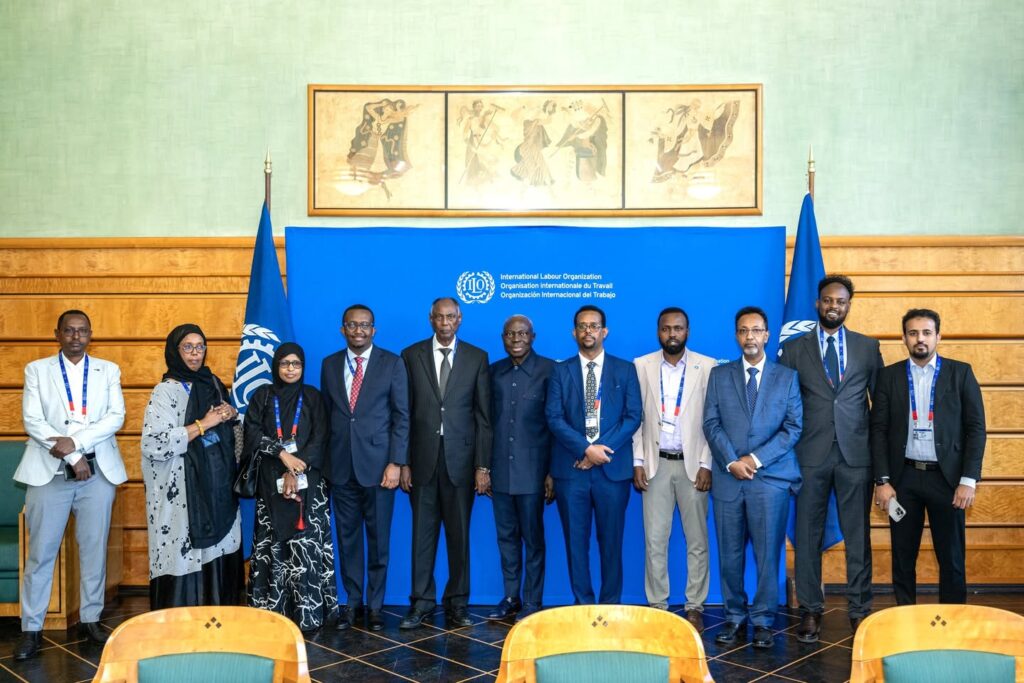
Geneva, Switzerland — Somalia’s tripartite delegation held a high-level engagement with Gilbert F. Houngbo, Director-General of the International Labour Organization, on the sidelines of the ongoing 114th Session of the International Labour Conference.
The delegation was led by Professor Salim Alio Ibro and included senior government officials, representatives of the Federation of Somali Trade Unions, representing workers, and the Somali Chamber of Commerce and Industry, representing employers.
The meeting provided an important platform to discuss Somalia’s progress in strengthening social dialogue and advancing tripartite cooperation among government, employers, and workers. Delegates highlighted the country’s commitment to building inclusive labour policies through consultation and cooperation among all key stakeholders.
Representatives of organized labour emphasized that meaningful participation of workers in national and international decision-making processes is essential for achieving sustainable development and social justice. They noted that Somalia has made notable progress in labour sector reforms and the promotion of social dialogue, while acknowledging that significant challenges remain.
Among the issues raised were the need to improve decent work opportunities, ensure fair wages, strengthen occupational safety standards, expand social protection systems, and address the impact of technological changes on the labour market. Particular attention was given to the growing influence of artificial intelligence and emerging technologies and their implications for workers and workplaces.
The delegation called for enhanced cooperation with the International Labour Organization to strengthen labour market institutions, safeguard trade union rights and freedoms, and promote full compliance with international labour standards.
Participants stressed that economic growth must translate into tangible benefits for workers and their families through better jobs, improved working conditions, and greater social protection. They also underscored the importance of ensuring that workers remain at the centre of discussions on the future of work.
The meeting reaffirmed Somalia’s commitment to tripartism as a key mechanism for promoting inclusive development and advancing labour rights. Delegates concluded that stronger collaboration among government, employers, and trade unions will be essential in building a more prosperous, equitable, and resilient future for Somali workers.
“Trade unions are not merely stakeholders in development; they are a driving force for social progress, economic justice, and democratic governance,” representatives stated, emphasizing that a stronger voice for workers contributes to a stronger and more inclusive Somalia.