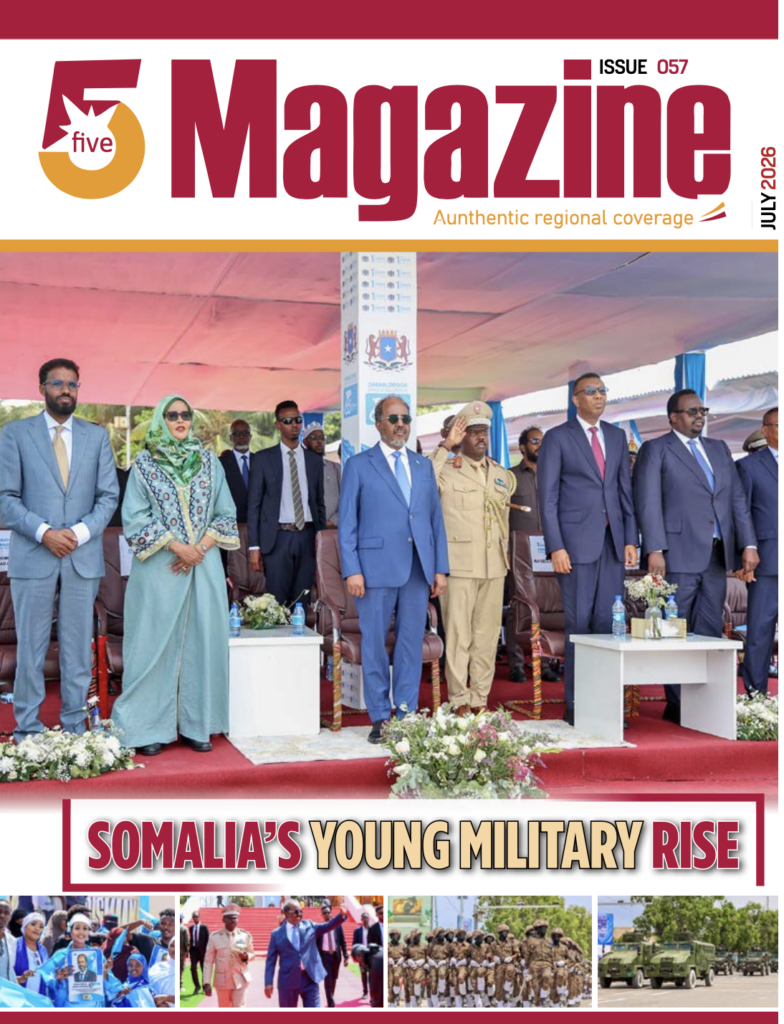
For more than three decades, Somalia’s journey toward peace and stability has been shaped by one fundamental reality: without security, sustainable development remains difficult to achieve. Schools cannot function effectively where violence persists, businesses hesitate to invest in uncertain environments, humanitarian organizations struggle to reach vulnerable communities, and ordinary citizens live under constant fear.
At the center of Somalia’s efforts to overcome these challenges stands the Somali National Army (SNA), an institution whose role extends beyond military operations. Today, the army represents one of the country’s principal national institutions, tasked not only with defending Somalia’s sovereignty but also with helping create the conditions necessary for governance, economic recovery, and long-term stability.
In recent years, the Somali National Army has undergone significant transformation. Improved training, renewed leadership, international partnerships, and the emergence of a younger generation of professional officers have contributed to the evolution of a force that seeks to meet the complex security demands of a modern Somalia. While challenges remain, many observers view the continued professionalization of the army as an important element of Somalia’s broader state-building efforts.
Security: The First Step Toward Development
Security is often described as the foundation upon which nations build prosperity. Without it, every aspect of national life becomes more difficult. Markets depend on safe roads. Farmers require secure access to their land. Children need safe schools. Hospitals must operate without fear of violence. Investors seek confidence that their businesses and employees will be protected.
Somalia has experienced firsthand how insecurity affects every sector of society. Years of conflict disrupted institutions, displaced millions of people, weakened public services, and slowed economic development.
This reality explains why strengthening national security institutions has become an essential component of Somalia’s recovery.
As Somalia continues rebuilding its institutions, the Somali National Army remains central to providing the security environment necessary for governance and development. Beyond defending national borders, the army contributes to protecting strategic infrastructure, government institutions, transportation routes, and communities affected by insecurity. These efforts support the broader process of restoring state authority and creating conditions where civilian institutions can function effectively.
The Fight Against Al-Shabaab
Among the most significant security challenges facing Somalia remains the long-running insurgency by Al-Shabaab.
For years, the group has carried out attacks targeting civilians, government institutions, security forces, businesses, and critical infrastructure. Their activities have disrupted livelihoods, restricted movement, and complicated efforts to expand government services into affected regions.
The response has required sustained military operations involving Somali security forces, often working alongside regional and international partners.
Military operations have sought to reclaim territory previously under insurgent influence while protecting key population centers and transportation corridors. The operations to expand government presence have enabled civilian authorities to return to some previously inaccessible areas.
Security specialists frequently note that defeating an insurgency involves more than military success alone. Tactical victories create opportunities, but lasting stability depends on governance, justice, reconciliation, and economic opportunity following military operations.
From Liberation to Stabilization
Military operations do not end when an area is secured. Once communities emerge from prolonged insecurity, the next challenge begins: ensuring that security is maintained while normal civilian life resumes.
This process often involves reopening roads, restoring local government administration, supporting police deployment, rebuilding schools and health facilities, and encouraging displaced families to return home safely.
The Somali National Army plays an important role during this transition period by helping maintain security while civilian institutions gradually resume responsibility.
As Ahmed Noor Ali, regional security analyst, explains:
“Military operations create the opportunity for peace, but sustainable peace depends on institutions. Security forces open the space in which governance, development, and reconciliation can take root.”
This relationship between security and governance has become increasingly recognized throughout Somalia’s recovery process. Every secure road reconnects markets. Every protected town improves access to education and healthcare. Every community free from violence creates new opportunities for investment and local economic growth.
A New Generation of Somali Soldiers
Perhaps one of the most notable developments within the Somali National Army has been the emergence of younger officers and soldiers who have received structured professional military education.
Unlike earlier generations shaped largely by years of civil conflict, many newer recruits have entered military service through formal recruitment, standardized training, and increasingly professional command structures.
These young personnel represent a generation that has grown up during Somalia’s recovery and often views military service as a contribution to national rebuilding rather than factional conflict.
Their education places greater emphasis not only on tactical skills but also on discipline, leadership, military ethics, civilian protection, and cooperation with other security institutions.
Many have also benefited from specialized instruction provided through partnerships with countries supporting Somalia’s security sector reforms. The result is an increasingly professional force whose effectiveness depends not only on equipment but also on training, accountability, and leadership.
The Value of International Training
Somalia’s security sector has benefited from support provided by several international partners. Among these partnerships, military cooperation with Turkey has become one of the most visible.
Training programs have helped prepare Somali officers and enlisted personnel in leadership, military planning, logistics, engineering, communications, and modern operational practices.
Beyond technical instruction, such programs also expose soldiers to professional military standards that emphasize discipline, organizational efficiency, respect for civilian authority, and adherence to the rule of law. Observers of security sector reform often argue that these investments produce long-term benefits because modern armies rely as much on leadership and institutional capacity as on battlefield capability.
Training also contributes to building confidence within the ranks, strengthening command structures, and improving operational coordination.
Young Leadership Driving Institutional Change
One of the encouraging trends identified by analysts is the gradual emergence of younger officers assuming greater responsibility throughout different levels of military leadership.
These officers often combine operational experience with formal military education acquired both within Somalia and abroad. Many have entered service during a period of institutional reform rather than fragmentation, giving them opportunities to contribute to building professional systems, improving planning processes, and strengthening operational coordination.
Security researchers frequently observe that leadership renewal is an essential component of successful military modernization. Professional institutions evolve when experienced senior commanders mentor younger leaders while allowing new ideas and contemporary training methods to influence organizational culture.
In Somalia, this generational transition represents an important aspect of the army’s continued development.
More Than a Fighting Force
Modern national armies perform responsibilities that extend well beyond the battlefield. While defending the country against armed threats remains their primary mission, they also play an important role in supporting national resilience during times of crisis. Armed forces are often called upon to assist during natural disasters and emergencies, protect strategic infrastructure such as airports, ports, and communication networks, safeguard government institutions, and secure key transportation routes that enable the movement of people, goods, and humanitarian assistance. In Somalia, these responsibilities have become increasingly important as efforts to rebuild state institutions continue. By helping to maintain security in critical areas and supporting broader stabilization efforts, the Somali National Army contributes to creating an environment in which government services can operate more effectively, businesses can function with greater confidence, and communities can gradually return to normal life. These responsibilities illustrate how a modern military’s contribution extends beyond combat, forming an integral part of a nation’s wider efforts to promote stability, resilience, and sustainable development.
National Unity Through Service
Somalia’s diversity is one of its strengths. The armed forces bring together men and women from different regions, communities, and backgrounds who serve under one national flag.
Shared training, common responsibilities, and collective service help reinforce the idea that national institutions belong to all citizens rather than any particular group.
Many scholars of state-building argue that national armies can contribute to strengthening civic identity when they remain professional, accountable, and representative of the broader population.
The Somali national army serves as a symbol of unity by rising above regional and clan divisions and fostering shared commitment to the nation.
The Path Ahead
Somalia’s future will ultimately depend on strong institutions working together to provide security, justice, opportunity, and public services. The Somali National Army represents one important pillar within this broader national effort.
Its responsibilities include protecting the country’s sovereignty, supporting security operations against armed groups, helping stabilize recovered communities, and creating conditions in which civilian institutions can expand their reach.
As Somalia continues its journey toward lasting peace, the professionalism of its armed forces, the development of younger military leaders, continued investment in training, and cooperation with national and international partners will remain important components of strengthening national security.
The ultimate measure of success will not simply be military achievements, but the ability of Somali citizens to live in communities where children attend school safely, businesses grow, humanitarian assistance reaches those in need, and public institutions serve their people with confidence.
In that sense, the Somali National Army’s role is closely connected to Somalia’s wider aspirations: a secure nation where peace enables development, institutions earn public trust, and future generations inherit a country that is more stable, more resilient, and better equipped to realize its full potential.