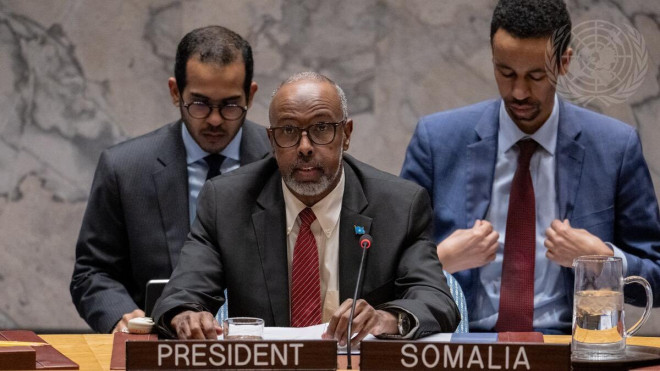
The Federal Government of Somalia has voted in favor of United Nations Security Council Resolution 2812, a landmark decision aimed at strengthening international efforts to safeguard security in the Red Sea, one of the world’s most strategic maritime corridors for global trade and energy exports.
The resolution focuses in particular on the growing threats facing this vital sea route, amid a rise in incidents endangering commercial shipping, energy security, and the uninterrupted flow of global goods. The Red Sea connects multiple continents and is used daily by hundreds of vessels transporting oil, commercial cargo, and essential international supplies.
During Security Council deliberations, Somali diplomats emphasized that maritime security cannot be sustainable unless the sovereignty of coastal states is fully respected and the root causes of conflict and instability are directly addressed. They warned that short-term or stopgap solutions are insufficient, stressing the urgent need to confront the underlying political, security, and economic drivers of maritime insecurity.
Somalia clearly articulated its position on key principles it believes are essential for lasting security. These include full respect for the sovereignty and dignity of states in the region, as well as decisive action to resolve the political, security, and economic crises that fuel dangerous confrontations.
The Somali delegation also underscored the importance of strict adherence to international law, particularly laws governing maritime conduct, commercial shipping, and the rights of coastal states. Somalia cautioned that violations of these legal frameworks create an environment of insecurity with global repercussions, disproportionately affecting vulnerable countries.
Another central point raised by Somalia was the need for Red Sea security initiatives to be led by coastal states themselves. As the countries most directly affected and most familiar with realities on the ground, Somalia argued that responsible local leadership is critical to achieving sustainable solutions.
Finally, Somalia called for stronger, genuine international cooperation based on coordination, trust, and intelligence-sharing to counter threats such as piracy, terrorism, illicit trafficking, and other activities that undermine maritime security.
This stance reflects Somalia’s broader commitment to rules-based maritime governance and regional ownership of security efforts in one of the world’s most crucial waterways.