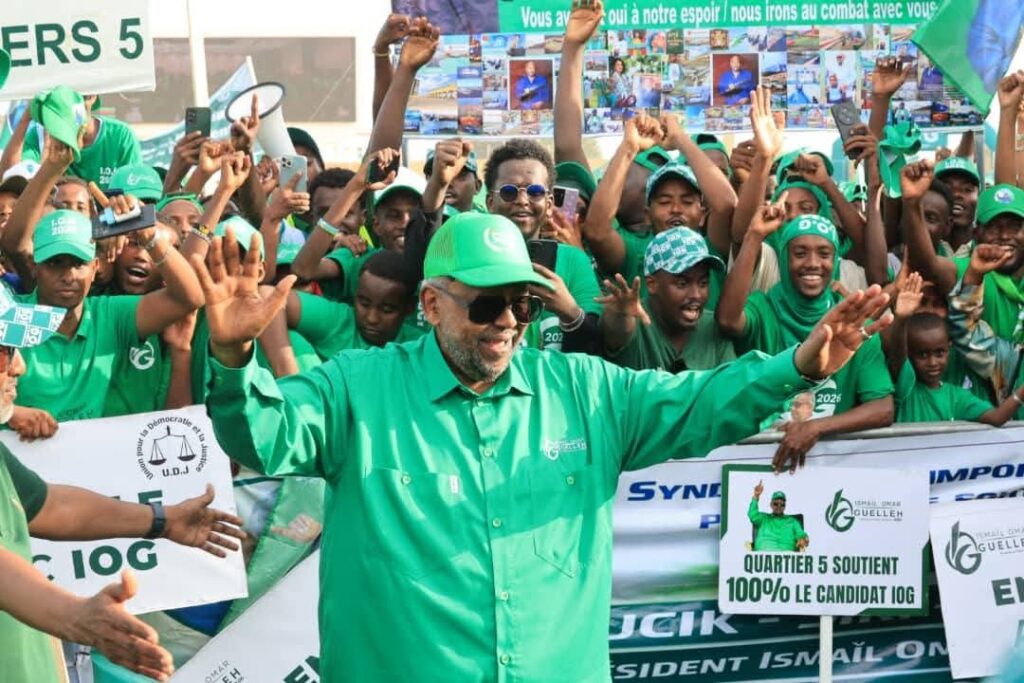
The resounding re-election of Ismail Omar Guelleh with 97 per cent of the vote is more than a domestic political outcome.
It also acts as a clear endorsement of continuity in Djibouti’s economic and geopolitical trajectory. For a small but strategically positioned nation in the Horn of Africa, the result signals stability at a time when consistency in leadership remains a critical ingredient for long-term transformation.
Provisional results released by the electoral commission on Friday night show an overwhelming margin for the incumbent, reinforcing public confidence in his administration’s direction.
These results point to a broader narrative: a population rallying behind a leadership model that has steadily positioned the country as a regional anchor for trade, logistics, and security.
For Kenya and the wider East African region, this continuity matters. Djibouti has, under President Guelleh, evolved into a vital maritime gateway, connecting landlocked neighbours to global markets. Its ports serve as lifelines for economies such as Ethiopia, with Addis Ababa linked through modern rail and road infrastructure. The proposed expansion of this corridor toward South Sudan and Uganda could reshape regional trade flows, complementing East Africa’s own integration agenda.
In his post-election remarks, President Guelleh struck a tone of unity and forward-looking ambition. “Tonight is a special night… a night filled with immense joy. This victory belongs to the people of Djibouti,” he said, framing the outcome as a collective mandate. He further underscored his vision for the country’s global standing, noting, “We want Djibouti to be visible on the world stage… a nation determined to overcome all hardships with a strong heart and a wise mind.”
Indeed, Djibouti’s rise is closely tied to its role in global security architecture. By hosting military bases for powers such as China, the United States, and France, the country has cemented its relevance in safeguarding one of the world’s busiest shipping lanes. This positioning not only enhances security but also injects significant economic value into the local economy.
Equally notable is Djibouti’s growing diplomatic footprint. The elevation of Mahmoud Ali Youssef within the African Union ecosystem underscores a nation increasingly punching above its weight in continental affairs. It is a reflection of deliberate statecraft anchored in stability and strategic engagement.
President Guelleh’s renewed mandate now offers Djibouti a chance to consolidate these gains while deepening integration, expanding infrastructure, and reinforcing its place as a gateway between Africa and the world.
.