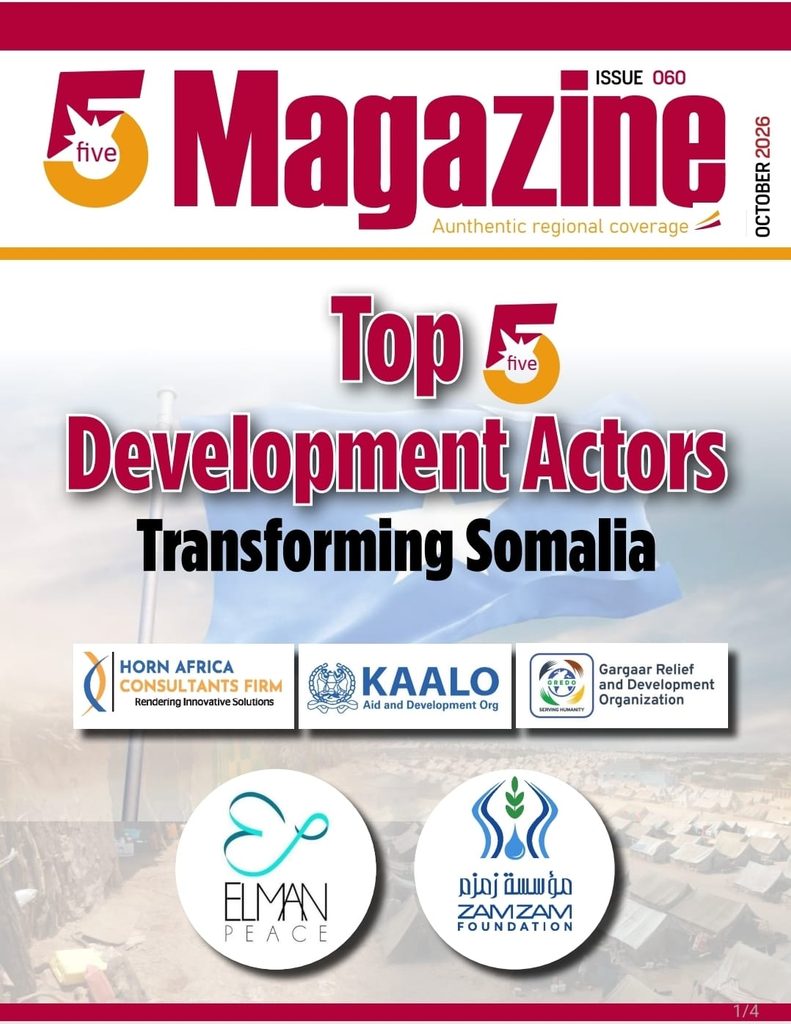
By 5 Magazine…..
Elman Peace Centre is a Somali, women- and youth-led non-profit organization working to build peaceful and just societies, protect human rights, cultivate leadership and create opportunities for communities affected by conflict, displacement, inequality and violence. Founded in 1990, EPC has developed its work around the belief that lasting peace requires more than ending violence. It also depends on protecting rights, supporting communities, creating opportunities and ensuring that women and young people have meaningful roles in shaping the future.
Over more than three decades, EPC has combined community-based services, peacebuilding, advocacy, research and policy engagement to respond to some of the challenges facing Somali communities. Its work places women, youth and children at the center, while also engaging community leaders, civil society, government institutions and other local partners.
This combination of frontline support and broader institutional engagement allows EPC to connect the immediate needs of communities with long-term efforts to strengthen peace, justice and opportunity.
Building peace and social cohesion
Peace, security and social cohesion are both center to EPC’s work. The organization supports inclusive peacebuilding, reconciliation and reintegration, while working with communities to strengthen relationships and create pathways away from violence. Its approach recognizes the importance of local participation and the role that communities can play in addressing conflict and rebuilding trust.
One of EPC’s notable initiatives is Drop the Gun, Pick Up the Pen, which has supported the disarmament, rehabilitation and reintegration of young people formerly associated with armed groups. By combining rehabilitation with opportunities for education and personal development, the initiative reflects EPC’s broader focus on helping young people move towards constructive roles within their communities.
EPC’s peacebuilding work also extends beyond Somalia. Through the Peace by Africa Network, grassroots peacebuilders across nine African countries are connected for knowledge exchange, cooperation and advocacy. The network provides a platform for locally led peacebuilding experiences and strengthens connections between people working for peace in different contexts.
Protecting rights and supporting survivors
Human rights and protection form another important part of EPC’s work. The organization provides survivor-centered protection and psychosocial services, with particular attention to women, girls, children and others affected by violence and conflict.
In 2010, EPC established Somalia’s first rape crisis center and developed survivor support and safe-house services. This work represents an important part of the organization’s efforts to ensure that survivors can access protection and support while maintaining dignity and safety.
EPC’s approach to protection is closely connected to its commitment to gender justice. Women and girls are not only supported as people affected by violence and inequality; they are also positioned as leaders and participants in peace and governance. The organization works to promote women’s meaningful participation in peacebuilding and decision-making, recognizing that inclusive societies require the voices and leadership of women.
Opportunities for young people
Youth are at the center of EPC’s work, particularly in a country where young people form a significant part of the population and where conflict and limited opportunities can affect their ability to build secure futures.
EPC supports youth skills, livelihoods and entrepreneurship, creating opportunities for young people to develop skills, pursue employment and strengthen their economic independence. These efforts are connected to its peacebuilding work, helping young people find constructive pathways and participate more positively in their communities.
Education and girls’ leadership are also important areas of work. Through rights-based education and leadership initiatives, EPC supports young people to understand their rights, develop leadership skills and participate in decisions that affect their lives and communities.
Mental health, climate and community resilience
EPC’s work also recognizes that the effects of conflict and displacement extend beyond physical safety. Mental health and wellbeing are therefore part of its community-based approach, particularly for people who have experienced violence, displacement and other forms of adversity.
At the same time, climate, peace and security are increasingly connected. Climate-related pressures can affect livelihoods, increase competition over resources and deepen existing vulnerabilities. EPC’s climate-resilient peacebuilding approach seeks to respond to these interconnected challenges, linking peacebuilding with efforts to strengthen communities’ ability to cope with changing environmental and social conditions.
Across its areas of work, EPC links frontline community support with institutional strengthening, advocacy and evidence-based learning. This allows the organization to respond to immediate needs while also contributing to broader discussions on policies, systems and approaches that can support longer-term change.
Working across Somalia and beyond
Headquartered in Mogadishu, EPC operates across Somalia, with branches and field offices across Federal Member States in the South and Central regions. Current program presenceincludes Mogadishu Banadir, Kismayo Jubaland, Dhusamareeb Galmudug , Garowe Puntlandand Barawe.
The organization works with a wide range of communities and partners, including women and girls, youth and children, survivors of violence, displaced and conflict-affected communities, community leaders, civil society, government institutions and other local partners. Its community-based approach allows it to work directly with people affected by conflict and inequality while also engaging institutions and decision-makers.
More than 30 years after its establishment, EPC’s work continues to bring together peacebuilding, human rights, protection, gender justice, youth opportunity and community resilience. Its experience demonstrates the importance of locally led approaches in addressing challenges that are deeply rooted in communities.
From local action to global policy
EPC’s contribution extends beyond direct community programming. The organization and its leadership have contributed to United Nations and international processes focused on peace, security, human rights and gender justice. This connection between local experience and global policy engagement gives EPC a platform to bring community perspectives into wider conversations about peace and rights.
Its record includes more than three decades of locally led peacebuilding and community-based action in Somalia, the establishment of the country’s first rape crisis center in 2010, support for thousands through Drop the Gun, Pick Up the Pen, and the creation of a Peace by Africa Network connecting grassroots peacebuilders across nine African countries.
For EPC, peacebuilding is therefore not limited to responding to conflict. It is about protecting people, strengthening communities, creating opportunities and cultivating leadership. From survivors seeking safety and support to young people developing skills and pursuing new opportunities, the organization’s work brings together different parts of the peacebuilding process.