By 5 Magazine…..
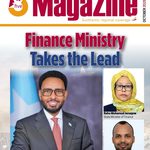
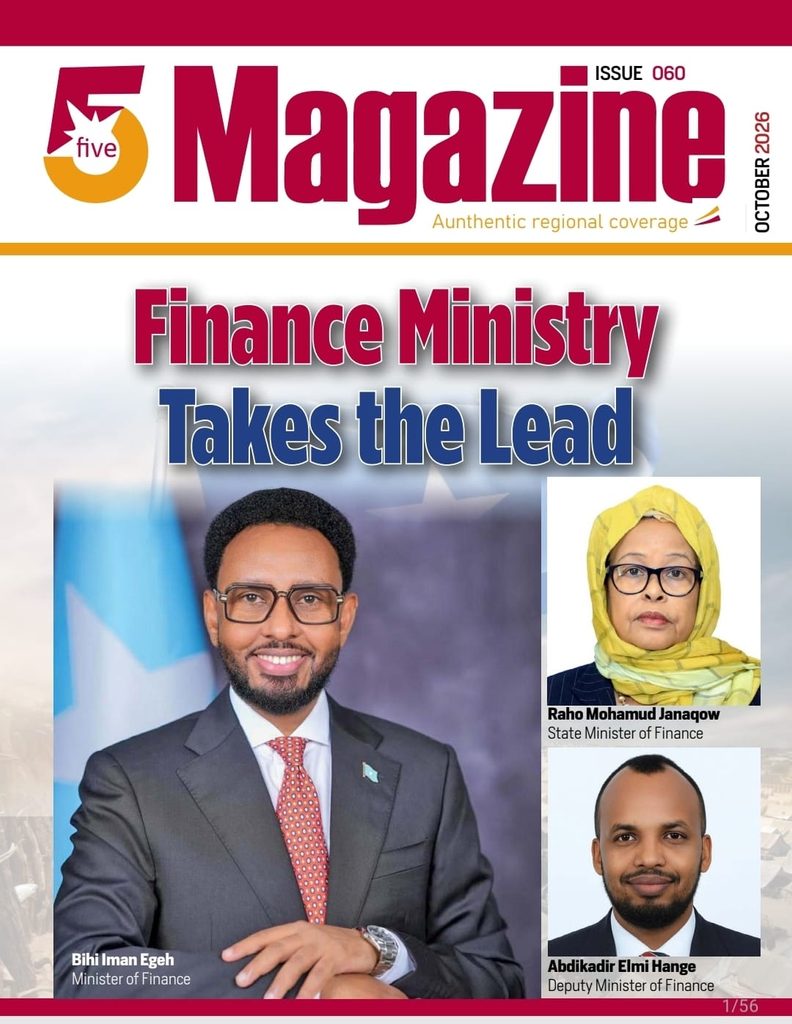
Finance Ministry Takes the Lead: The Ministry of Finance has ranked first in the overall performance assessment of ministries under the DanQaran Government, this being the Ministry of Finance’s marking a significant milestone in Somalia’s ongoing efforts to strengthen public financial management and build more effective, transparent and accountable financial institutions.
The recognition reflects substantial progress across a range of areas, including public financial management, stellar domestic revenue mobilization, transparency and accountability, the execution of fiduciary duties in overseeing development finance, and financial institutional reform.
While the ranking is also the product of the collaborative dynamics that defines the work carried out across the Ministry and the wider government, the award also comes after a period of tangible gains in the economic reform agenda and institutional strengthening under the leadership of Minister of Finance Bihi Iman Egeh, who assumed office in July 2023. The Ministry has since continued to advance reforms aimed at strengthening the management of public resources, increasing domestic revenue and improving Somalia’s engagement with international financial institutions.
A Stronger Public Financial Management System
The Ministry’s achievements are extensive. The following highlights represent some of the progress made during the DanQaran Government’s tenure. One of the most notable achievements has been the increase in domestic government revenue, which rose by 92 percent during the DanQaran Government’s tenure. The increase demonstrates progress in modernizing revenue systems and strengthening the Government’s capacity to collect and manage domestic resources.
The Ministry has also recorded an important milestone in financial accountability. For the first time, the Government’s financial statements received a clean audit opinion, representing a significant step forward in transparency, accountability and sound financial management.
Public financial management reforms and modernization have also reached an advanced stage. International financial institutions have acknowledged progress in modernizing financial systems, revenue administration, budgeting and accountability. These reforms have helped strengthen the institutional foundations needed for more effective management of public resources.
Moreover, faith in public financial management systems of the FGS is also a cornerstone of activities undertaken by the Ministry of Finance. Towards that, improvements in budget transparency by the FGS has been noteworthy. In the Open Budget Survey 2025, Somalia scored 39/100 on budget transparency, up from 3 in 2019, and now above the Sub-Saharan Africa average (38). Its public participation score rose from zero to 19/100, above both the global (17) and regional (16) averages. The gains reflect concrete reforms: pre-budget consultations, a Citizens Budget published online, and a comprehensive Pre-Budget Statement.
Stronger Performance in Development Financing
Somalia has also emerged as a leading performer among countries in Eastern and Southern Africa in the utilization and implementation of project financing.
In 2026, the World Bank approved more than $500 million in programmed project financing for Somalia, the highest amount approved in a single year. This development reflects growing confidence in the country’s ability to manage and implement development financing and represents an important opportunity to support national development priorities.
The progress has been accompanied by improvements in budget transparency and public participation. Somalia surpassed both the Sub-Saharan African and global averages in budget transparency and public participation in the budget process, reflecting sustained reforms in the country’s public financial management system.
Recognition from the Prime Minister
Prime Minister Hamza Abdi Barre commended the Ministry of Finance for the progress it has made in strengthening the country’s national financial management system, particularly through increased domestic revenue, greater transparency and accountability, and improvements in the management and administration of the national economy.
The Prime Minister also highlighted the Government’s approach to financial support provided to the Federal Member States.
“The government has not politicized, and will not politicize, the financial support it provides to the Federal Member States. The year 2025 was the year in which the Federal Member States received the highest level of financial support,” said Prime Minister Hamza Abdi Barre.
Bihi Egeh at the Centre of Major Reforms
At the center of many of these developments is Minister of Finance Bihi Iman Egeh, a relatively young Somali political leader whose tenure at the Ministry has coincided with several important milestones in Somalia’s economic and financial reform journey.
Bihi Egeh was appointed Minister of Finance in July 2023, after previously serving as Minister of Labour and Social Affairs. He had already been a member of the Federal Parliament since 2016 and had served as Secretary of the Parliamentary Foreign Affairs Committee. The African Development Bank describes him as having extensive experience in the development and humanitarian sectors. He holds a Master’s degree in Diplomatic Studies from St Antony’s College, University of Oxford, and a Bachelor’s degree in Global Studies and International Relations from New Generation University College in Addis Ababa.
His arrival at the Ministry of Finance came at a particularly important moment for Somalia. Only months after his appointment, Somalia reached the Completion Point of the Heavily Indebted Poor Countries (HIPC) Initiative in December 2023, following years of reforms. In December 2023, Somalia reached the HIPC Completion Point, achieving US$4.5 billion in debt relief. External debt fell from 64% of GDP in 2018 to under 6% by end-2023, restoring debt sustainability and reopening access to new external financing. The IMF has described Bihi as having overseen the completion of this historic process after his appointment as Finance Minister.
Since then, the Ministry under his leadership has continued to focus on public financial management, increasing domestic revenue mobilization and further fiscal reform. The Ministry’s current leadership structure lists Bihi Egeh as Minister, supported by a State Minister, Deputy Minister and Director General.
Moreover, Minister Bihi Egeh’s track record has extended to the international arena. In July 2025, Minister Bihi Egeh was named African Finance Minister of the Year by African Leadership Magazine at its African Business Leadership Awards in London, in recognition of Somalia’s fiscal reform and public financial management. The Council of Ministers formally congratulated him on the honour.
“This Is Only the Beginning”
Responding to the Ministry’s first-place ranking, Minister Bihi Egeh attributed the achievement to the collective efforts of the Ministry’s leadership, management, staff and partners.
“We are very pleased with the significant progress we have made and the results we have achieved. This recognition reflects the hard work of our institutions, our staff and our partners in strengthening public financial management, increasing domestic revenue, improving transparency and accountability, and advancing financial sector reforms.
“However, this is only the beginning. We still have much more work to do. We will continue building on these achievements to strengthen our institutions, improve the management of public resources, and ensure that government finances are managed more efficiently, transparently and responsibly for the benefit of the Somali people.”
Institutional Strength
The Ministry’s leadership in international fora and initiatives addressing global and regional economic and financial issues has also strengthened Somalia’s standing, visibility and representation in the international financial system.
This broader engagement has taken place alongside domestic reforms designed to strengthen the foundations of the Somali economy. The country’s completion of the HIPC process restored access to multilateral development finance and mutually reinforcing advisory support, this coming after years of constrained access to international financing. The African Development Bank has described the achievement as opening a new chapter for Somalia while noting the country’s continued focus on domestic revenue mobilization and development financing.
The latest first-place ranking therefore comes against the backdrop of a wider reform journey. It reflects not only the Ministry’s performance in a single annual assessment, but also the cumulative impact of efforts to modernize financial systems, strengthen revenue administration, improve accountability and establish stronger institutional frameworks.