By 5 Magazine…..
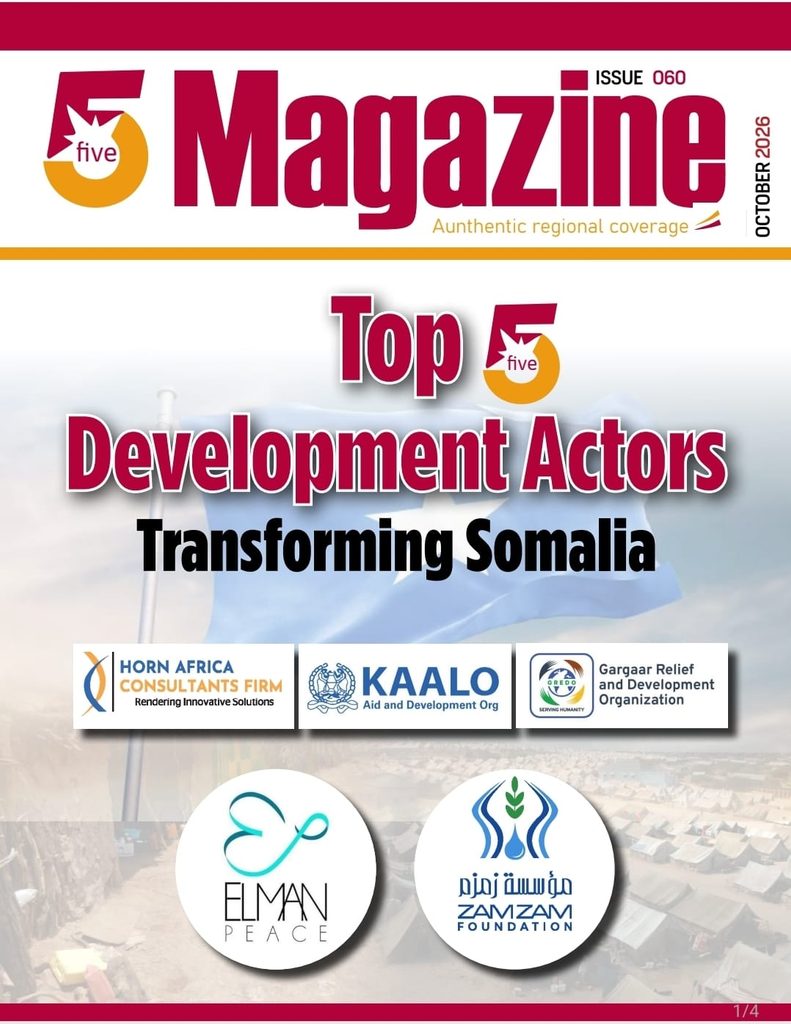
When Zamzam Foundation was established in December 1992, Somalia was in the grip of a devastating civil war, with communities facing gunfire, missiles, drought, famine and the collapse of state institutions. The foundation emerged at a moment when the need for humanitarian assistance was immediate and immense, seeking to restore dignity and hope to vulnerable Somalis looking for safety and a brighter future. Its beginnings coincided with the arrival of United Nations forces under Operation Restore Hope, and Zamzam embraced the spirit of that slogan by turning hope into tangible relief.
Medical care was provided to the wounded, clean water was delivered to thirsty communities, and emergency assistance offered a measure of comfort and stability amid chaos. What began as a response to an extraordinary crisis would grow over more than three decades into a broad humanitarian and development organization working across education, healthcare, WASH, livelihoods, social protection, emergency response, peacebuilding and community resilience.
During its first stage, from 1992 to 1996, Zamzam concentrated on the immediate consequences of state collapse, conflict, drought and famine. Emergency food and water assistance, temporary shelters for displaced people, community kitchens, healthcare support, mobile medical camps, and awareness campaigns on health, hygiene and drought mitigation formed the foundation’s early response.
Yet even in those difficult years, Zamzam recognized that humanitarian needs could not be addressed only through short-term relief. It began investing in the future by establishing schools such as Salahuddin School in Baidoa, supporting women and children through initiatives including the Hamdi Organization for Women and Child Care, and creating employment opportunities through projects such as the Al-Quds Handicraft and Weaving Factory.
From emergency relief to long-term development
Between 1997 and 2001, the foundation entered a period of consolidation and expansion, broadening its work in education, healthcare and social services, while introducing initiatives focused on long-term development and sustainability. Schools and educational centres were established in different parts of Somalia, teachers received training and educational materials were provided, while healthcare services expanded. A major milestone came in 2001 with the establishment of Arafat Hospital in Mogadishu, strengthening the foundation’s growing contribution to accessible healthcare.
From 2002 to 2006, Zamzam increasingly focused on sustainable development, capacity building, collaboration and community ownership. Its approach evolved beyond immediate relief toward helping communities develop their own capacities and participate in solutions to the challenges they faced.
Between 2007 and 2011, institutional rebuilding became a major priority as the foundation developed strategic planning systems, strengthened internal policies and procedures, invested in staff training, expanded its geographical reach and developed partnerships with regional and international organizations. Community participation and local ownership became increasingly important, alongside sustainability plans intended to ensure that communities could continue benefiting from projects after Zamzam’s direct intervention ended.
From 2012 to 2017, Zamzam entered a phase of institutional excellence, with greater emphasis on performance improvement, quality, transparency, staff development, needs assessments, stronger partnerships and programme sustainability. In 2016, the Foundation received ISO certification, described in the anniversary material as the first developmental institution in Somalia to achieve this recognition. The milestone reflected Zamzam’s commitment to quality and strengthened its position as a reliable partner for donors, governments and international organizations.
Responding to crisis
Relief and emergency response have remained among the main pillars of Zamzam’s work. Over the years, the Foundation responded to major droughts and famines, including the crises of 1993, 2005, 2009, 2011 and 2022. Working with partners, Zamzam delivered food, medicine, clean water, mobile healthcare, therapeutic feeding, temporary shelters, housing rehabilitation and WASH services to communities affected by crises.
The Foundation has also maintained a strong commitment to vulnerable children. Since its establishment, Zamzam has sponsored more than 12,000 orphans, providing support for healthcare and education while monitoring their well-being and development. Seasonal initiatives, including Ramadan food assistance, Zakat al-Fitr, Eid clothing and Qurbani distributions, have further enabled Zamzam and its partners to reach vulnerable families across Somalia.
Building Somalia’s education system
Education has remained a cornerstone of Zamzam’s approach to long-term development. Recognizing education as a foundation for progress and prosperity, the Foundation has contributed to rebuilding Somalia’s education system after decades of conflict. It has constructed and established more than 150 schools across Somalia, covering nursery, primary and secondary education, while supporting teacher recruitment, school facilities and educational resources.
The Foundation directly manages more than 21 schools across several regions, serving more than 11,000 students. Its commitment to higher education led to the establishment of Zamzam University in 2012, initially as an agricultural training college. The institution conducted 22 agricultural training programmes before expanding into a university offering disciplines including medicine, engineering and agriculture. Through partnerships such as the one with the Turkish Cooperation and Coordination Agency, TIKA, the university has graduated around 1,500 students, contributing to Somalia’s human resource development.
Healthcare, water and the foundations of dignity
Healthcare has likewise remained a defining part of Zamzam’s humanitarian and development work. Arafat Hospital, established in 2001, became an important part of efforts to provide accessible healthcare, while the foundation has supported maternal and child health services, primary healthcare, medical convoys, mobile clinics and specialized health interventions. Its anti-blindness work has contributed to restoring sight for thousands of people through cataract surgeries and partnerships with organizations and hospitals supporting eye health.
Access to clean water has remained equally central, particularly in communities affected by drought and water scarcity. Zamzam has developed shallow and deep wells, artesian wells, boreholes, water storage systems, irrigation infrastructure and emergency water trucking. Through initiatives such as the Good Samaritans Program, Zamzam and its partners supported the development of deep wells and schools in underserved communities. Thirty-six deep wells were drilled across Somalia, while the second phase linked water infrastructure with education, eventually contributing to a total of 47 schools.
Helping communities build their own resilience
Zamzam’s work has increasingly focused on livelihoods and the capacity of communities to withstand repeated shocks. Productive projects, agricultural support, vocational training, entrepreneurship and small-business development have formed part of a broader objective of helping communities move beyond repeated humanitarian dependence toward greater resilience and self-reliance.
From 2018 to 2022, the foundation deepened this approach through environmental sustainability, water and energy conservation, tree planting, entrepreneurship, vocational training, support for small and medium-sized enterprises, and the empowerment of women and youth. Its programmeshave also included capacity building, community participation, peacebuilding, reconciliation and support for local institutions. The intention has been not simply to deliver services, but to create opportunities for vulnerable communities to participate in decisions affecting their lives and develop the skills required to manage and sustain development initiatives.
This integrated approach is visible in projects such as Al-Najat Charity Village, established in 2022 with support from Kuwait’s Al-Najat Charity Society. The village brought together housing for displaced families with a school, mosque, health centre, sports field, greenhouses and other essential services, creating a more comprehensive environment for families to rebuild their lives.
2025: A continuing journey of hope and service
More than three decades after its establishment, Zamzam Foundation’s mission continues to translate into practical action. In 2025, its humanitarian and development interventions reached 2.2 million people. Of these, 176,000 people received life-saving emergency assistance, while seasonal food distributions provided more than 1.5 million people with food assistance, continuing Zamzam’s longstanding commitment to families facing hunger and hardship.
Access to basic services remained central to the foundation’s work. In 2025, 133,000 people were provided with clean water, contributing to healthier and more resilient communities, while 212,000 people received healthcare services. Education and livelihoods also remained important pillars: five new schools were built across four regions, and 6,700 farmers and small businesses received support intended to strengthen livelihoods and economic resilience.
The foundation also continued its long-standing commitment to protecting and supporting vulnerable children. In 2025, 11,000 orphaned children and their families received support, reflecting a continuation of Zamzam’s decades-long focus on children, families and communities facing vulnerability. Together, these figures demonstrate how the vision that has guided Zamzam for more than three decades continues to translate into practical action.
Priorities for 2025–2030
The next chapter of Zamzam’s journey is framed by six strategic priorities: strengthening integrated health, nutrition and WASH systems; scaling climate-resilient livelihoods and sustainable food security; advancing locally led humanitarian and development action; promoting peacebuilding, social cohesion and inclusive governance; investing in women, youth and protection outcomes; and strengthening organizational systems, compliance and learning.
The direction reflects an organization whose work has evolved alongside Somalia’s changing humanitarian and development needs. Zamzam began in 1992 by responding to wounded people, thirsty families and communities caught in war, drought and famine. Over time, its work expanded into schools, healthcare, water infrastructure, higher education, livelihoods, social protection, peacebuilding and community resilience.
In 2025 alone, Zamzam Foundation helped 2.2 million people, carrying forward a legacy of more than three decades of hope, service and resilience. The figures tell one part of that story; the broader journey is reflected in the institutions built, communities supported and opportunities created. From emergency relief in the early years to education, healthcare, clean water, food security, livelihoods and social protection today, Zamzam’s journey continues to be shaped by one enduring purpose: serving communities, protecting dignity and building a more resilient future.