By 5 Magazine…..
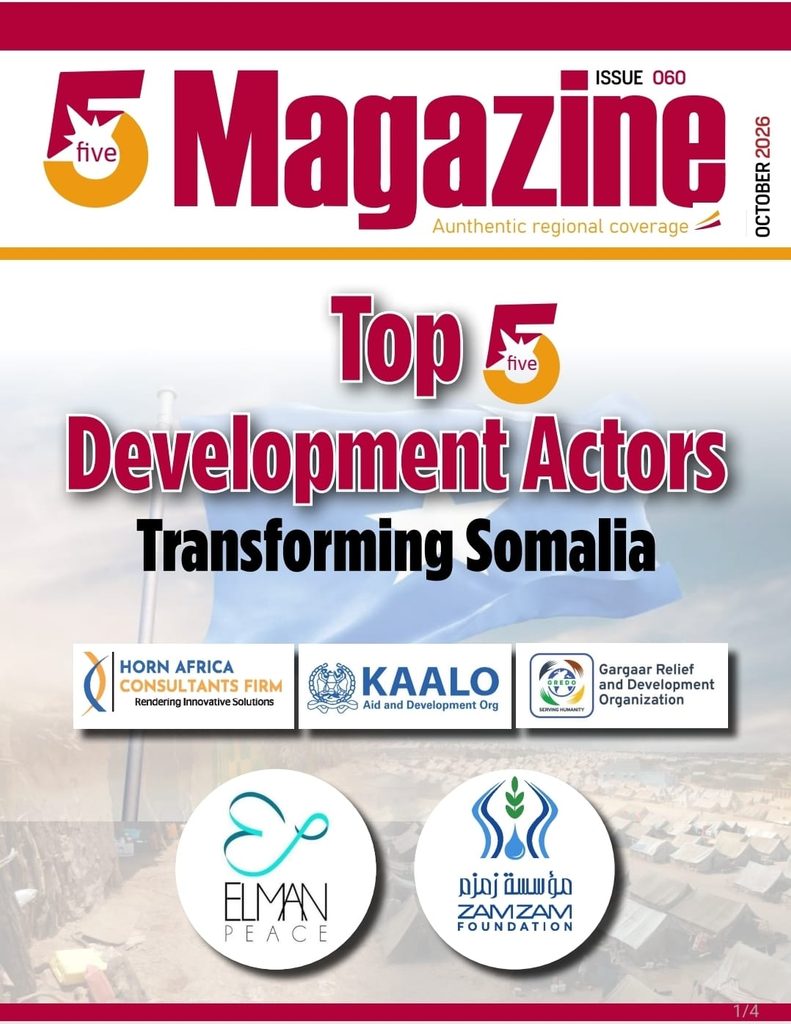
In Somalia, where drought, floods, displacement, conflict and poverty can converge with little warning, humanitarian work increasingly demands more than emergency assistance. KAALO Aid and Development has built its approach around that reality, combining immediate lifesaving response with longer-term efforts to strengthen livelihoods, rights, governance and community resilience.
Established in 1991, KAALO has grown from an organization responding to communities affected by conflict and displacement into a national humanitarian and development organization with a strong operational presence across Bari, Sanaag, Sool, Nugaal, Togdheer, Mudug, Hiiraan, Galgaduud, Bay, Lower Juba and Banaadir.
Its current programming is organized around four thematic areas: Emergency and Lifesaving Response; Inclusive Governance and Peacebuilding; Livelihoods and Climate Resilience; and Gender Equality, Human Rights and Protection. Together, these areas reflect an approach that connects immediate needs with the deeper social, economic and environmental conditions that shape people’s lives.
Responding when crisis strikes
Emergency and Lifesaving Response remains at the heart of KAALO’s work, particularly for communities facing conflict, drought, floods, disease outbreaks and displacement. The organization provides timely, principled and lifesaving humanitarian assistance to internally displaced people, refugees, returnees, pastoralists and vulnerable host communities, guided by the humanitarian principles of humanity, neutrality, impartiality and independence.
Water, sanitation and hygiene is a major part of this work, with interventions supporting emergency water supplies, rehabilitation of water infrastructure, sanitation facilities, hygiene awareness and distribution of essential hygiene materials. These measures are closely linked to public health, particularly where unsafe water and inadequate sanitation increase the risk of disease.
Protection is integrated into emergency programming, with attention to the dignity, rights and wellbeing of women, children, persons with disabilities and displaced populations. Food Security and Livelihoods interventions respond to immediate food insecurity while also supporting income-generating activities, livestock-based livelihoods and agricultural production that can help households recover and reduce dependence on humanitarian assistance.
Health and nutrition interventions similarly combine emergency services, nutrition screening, treatment of acute malnutrition, health education and community outreach, with particular attention to children under five and pregnant and lactating women.
Building livelihoods and climate resilience
The second thematic area, Livelihoods and Climate Resilience, moves the focus from surviving shocks to strengthening the systems that enable households to withstand them. KAALO promotes food and income security through sustainable and climate-smart approaches covering water for climate resilience, ecosystem protection and restoration, economic development, skills development and employment creation, agricultural development, production value chains, financial inclusion and market system development.
Agriculture, livestock and fisheries are central to this work because they remain important sources of food and income for many communities. KAALO supports farmers, pastoralists and fishing communities through climate-smart agricultural practices, livestock development, fisheries support and improved farming techniques, while promoting access to appropriate technologies, inputs and technical knowledge. Its work also seeks to strengthen the economic side of livelihoods by helping producers connect to markets, improve product quality, access financial services and participate in more efficient market systems.
The organization’s recent field activities illustrate this practical approach. In 2026, KAALO highlighted work ranging from agricultural machinery support in Dharoor and farmer cooperative initiatives to borehole rehabilitation, solar-powered water systems and permagardenactivities. Its Climate Resilient Rural Communities project, implemented with the Puntland Ministry of Agriculture and Irrigation, focuses on sustainable livelihoods, food security, climate-smart agriculture, community resilience and adaptation to climate-related challenges. The project is funded by NORAD through The Development Fund of Norway.
Promoting Rights, Governance and Peace
KAALO’s third thematic area, Inclusive Governance and Peacebuilding, recognizes that resilient communities also depend on institutions that are accountable, responsive and inclusive. The organization works with government institutions, civil society organizations, community leaders and citizens to strengthen participation, social accountability, access to justice, peacebuilding, institutional capacity, community dialogue and advocacy.
Civic engagement forms an important part of this work. KAALO supports inclusive governance structures that encourage the participation of women, youth, marginalized groups and vulnerable communities in public affairs, while civic and voter education initiatives seek to strengthen awareness of rights and responsibilities and encourage informed engagement in governance and electoral processes. Social accountability and access to justice are addressed through legal awareness campaigns and community-based initiatives that help citizens understand their rights and engage institutions on public service delivery.
Peacebuilding is closely connected to these efforts. Through community dialogue and conflict-sensitive programming, KAALO brings together community groups, traditional leaders, women, youth and local authorities to support reconciliation, social cohesion and peaceful relationships.
The organization also invests in institutional strengthening and evidence-based advocacy, seeking to improve the effectiveness and responsiveness of public institutions and contribute to policies that advance human rights and peaceful communities.
Building Peace, Strengthening Communities: KAALO’s Peacebuilding Efforts
KAALO has been actively supporting peacebuilding and social cohesion in conflict-affected communities, including Kalabayr and Birtadheer, where peace committees were established in 2022 to strengthen community-led conflict prevention, dialogue, and peaceful coexistence. Building on these community structures, KAALO in 2025 constructed and equipped dedicated Peace Centers in both locations, providing safe and accessible spaces for community dialogue, mediation, reconciliation, and collective problem-solving. These efforts have strengthened the capacity of local communities to address conflicts peacefully and promote sustainable peace.
Similarly, in Sheerbi, KAALO supported the establishment of a community-based peace committee and subsequently constructed a well-equipped Peace Center to provide a lasting platform for peacebuilding activities. The Peace Centers in Kalabayr, Birtadheer, and Sheerbirepresent an important milestone in KAALO’s commitment to strengthening local peace mechanisms, fostering peaceful coexistence, and supporting inclusive community engagement. The initiative was funded by the Government of Norway through Norwegian Church Aid (NCA) and has contributed to stronger community structures for dialogue, reconciliation, and sustainable peace.
Advancing Gender Equality and Protection
The fourth thematic area, Gender Equality, Human Rights and Protection, places the experiences of vulnerable and marginalized groups at the centre of KAALO’s programming. The organization works to promote gender equality, address discrimination and exclusion, and protect the rights and wellbeing of internally displaced people, refugees, asylum seekers, returnees, women and girls, youth, minority clans, children and persons with disabilities.
Women’s empowerment and positive social norms are important components of this work. KAALO supports women’s leadership, civic engagement and participation in decision-making, while community-based approaches seek to challenge harmful gender stereotypes and create safer, more inclusive environments. The organization also works to prevent and respond to gender-based violence and harmful traditional practices, including female genital mutilation or cutting, child marriage and forced marriage.
Protection services include awareness raising, referrals, psychosocial support and efforts to strengthen local protection mechanisms. By working with communities, institutions and service providers, KAALO seeks to improve access to justice and ensure that vulnerable people can access support in ways that protect their dignity and rights. This rights-based approach also connects with the organization’s wider commitment to equity and inclusion.
Strengthening Protection and Access to Services for Refugees and Asylum Seekers
KAALO, with funding from UNHCR Somalia, has implemented a dedicated Refugees and Asylum Seekers (RAS) Protection Project in Bosaso, Galkacyo, and Gardo, providing essential protection and legal support to vulnerable refugee and asylum-seeking communities. Through the project, KAALO has facilitated access to legal assistance, protection services, and referrals to essential health and other support services, helping individuals and families better understand and exercise their rights while accessing available assistance.
This milestone has strengthened the protection environment for refugees and asylum seekers registered on the UNHCR refugee platform, enabling them to receive necessary legal aid and protection services in a more accessible and coordinated manner. Through community-based engagement, case support, referrals, and collaboration with relevant stakeholders, KAALO continues to contribute to safer and more inclusive communities where refugees and asylum seekers can access appropriate services and protection.
Presence across Somalia
The breadth of KAALO’s work is matched by its geographical presence. The organization operates across 11 regions of Somalia, working through a field network and community-based approach alongside local authorities, development partners and communities. Its stated mission is to transform the lives of the most vulnerable and marginalized communities, improve wellbeing and build long-term resilience through evidence-based humanitarian action and inclusive, sustainable development.
Its current strategic direction, set out in the 2026–2029 Strategic Plan, retains the four thematic areas while strengthening the links between humanitarian response, development programming, civic engagement and organizational systems.
The plan recognizes that Somalia’s challenges are interconnected: climate-related disasters can drive livelihood loss, resource-based conflict and displacement, while governance gaps and human rights deficiencies can deepen vulnerability. KAALO therefore emphasizes evidence gathering, monitoring, evaluation, accountability, learning and impact tracking as foundations for its programming and operations.
Building communities for what comes next
The evolution of KAALO’s work reflects a wider shift from viewing humanitarian assistance only as a response to crisis toward understanding resilience as a long-term process. A water system can protect a community during drought, but sustainable water management can also support production. Livelihood support can address immediate food insecurity, while skills, markets and financial inclusion can help households build more secure incomes.
Peacebuilding can respond to local tensions while stronger institutions and social accountability can help communities participate in decisions that affect them. Protection can respond to immediate risks while gender equality and rights-based approaches address exclusion and strengthen participation.
That balance is visible in the way KAALO links its thematic areas rather than treating them as isolated interventions. Emergency support can protect a household during a crisis, while livelihood assistance can help it recover; governance work can strengthen the institutions that deliver services, while protection programming can ensure that those services are accessible without discrimination. Climate resilience adds another layer, helping communities prepare for difficult environmental conditions through water management, ecosystem restoration, adaptation and diversified economic opportunities. The result is a programme model in which humanitarian action, development and community participation reinforce one another. KAALO’s strategic plan describes this interplay as central to its programming in Somalia where sudden-onset climate disasters, livelihood loss, resource-based conflict and displacement can interact and compound existing vulnerabilities.