Somalia has intensified efforts to strengthen its fiscal institutions after the Council of Ministers endorsed legislation creating the Somali National Revenue Authority (NRA), a reform widely regarded as one of the country’s most significant public finance initiatives in recent years.
The proposed authority is expected to modernise tax administration, improve revenue collection, strengthen fiscal federalism and accelerate domestic resource mobilisation as Somalia seeks to reduce reliance on unpredictable external assistance.
The Cabinet-approved legislation establishes the legal framework for a unified national agency that will oversee tax administration across the country. The move builds on Somalia’s recently adopted Constitution, which defines revenue-raising responsibilities among the Federal Government, Federal Member States and local governments while establishing institutions to support fiscal federalism.
The National Revenue Authority will provide the institutional framework needed to implement these constitutional provisions by coordinating revenue administration, harmonising tax systems and strengthening cooperation between different levels of government.
According to officials within the Ministry of Finance, the authority will integrate government revenue collection under a single institution, replacing fragmented systems with more efficient and transparent processes. Digital technologies will also be introduced to improve compliance, accountability and service delivery.
The reforms are expected to standardise tax administration, strengthen oversight, enhance taxpayer services and establish a clear legal basis for collecting taxes and other public revenues.
Economic analysts argue that effective revenue authorities play a central role in improving tax compliance, expanding the taxpayer base and reducing revenue losses. Increased domestic revenue enables governments to invest in essential sectors while reducing dependence on foreign aid and borrowing. Transparent tax administration also strengthens investor confidence and supports long-term economic growth.
For Somalia, the reforms represent another important step in rebuilding state institutions after years of economic restructuring. Greater domestic revenue is expected to finance priority investments in education, health services, transport infrastructure, water supply and national security.
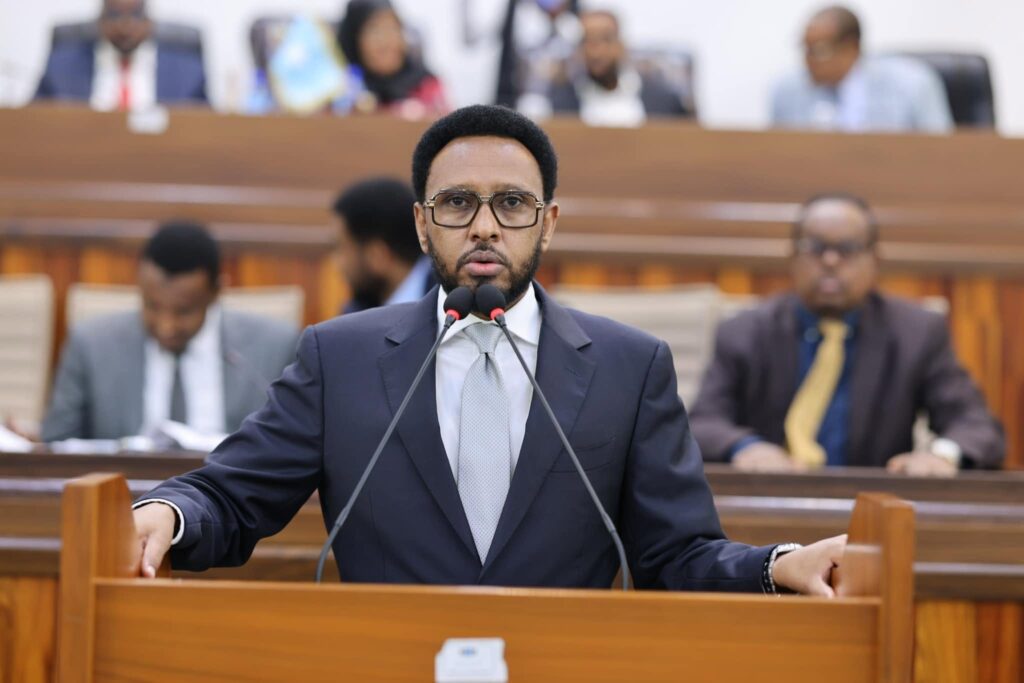
Finance Minister Bihi Iman Egeh has spearheaded the reform agenda, overseeing initiatives to modernise tax laws, digitise revenue collection and strengthen public financial management.
He said the government’s objective is to establish a transparent, efficient and accountable revenue administration capable of financing public services through domestic resources. The draft regulations have already been approved by Cabinet and will be presented to Parliament once lawmakers resume sittings.
The minister added that the authority would improve institutional coordination, strengthen public confidence and ensure taxes are collected fairly and efficiently.
Parliament will now consider the legislation for approval. Once enacted, the Somali National Revenue Authority will become the country’s central institution for domestic revenue collection, reinforcing Somalia’s broader programme of fiscal reforms aimed at building resilient, accountable and self-sustaining public institutions.