By 5 TV Editor
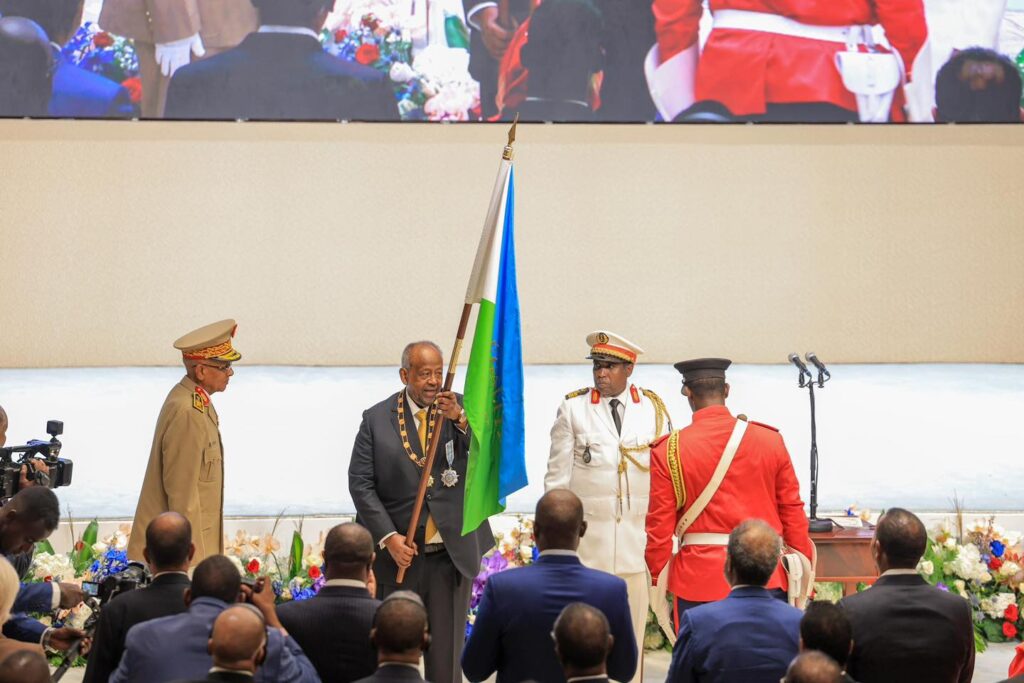
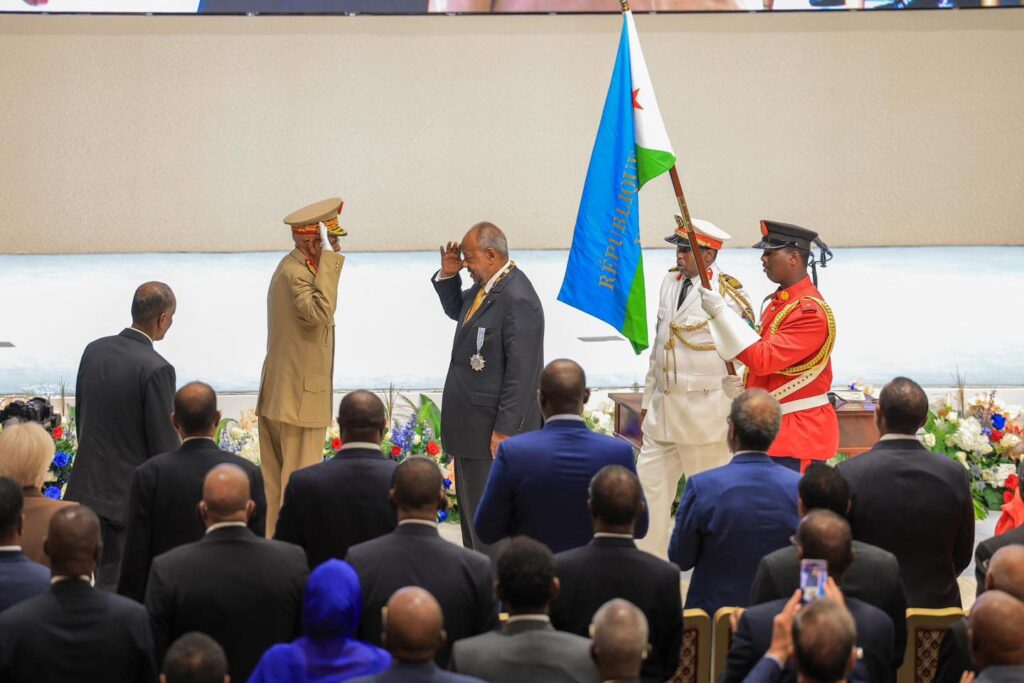
Regional integration and infrastructure development took centre stage as Ismaïl Omar Guelleh was sworn in for another term as President of Djibouti, with neighbouring countries signalling renewed commitment to the ambitious DESSU corridor project.
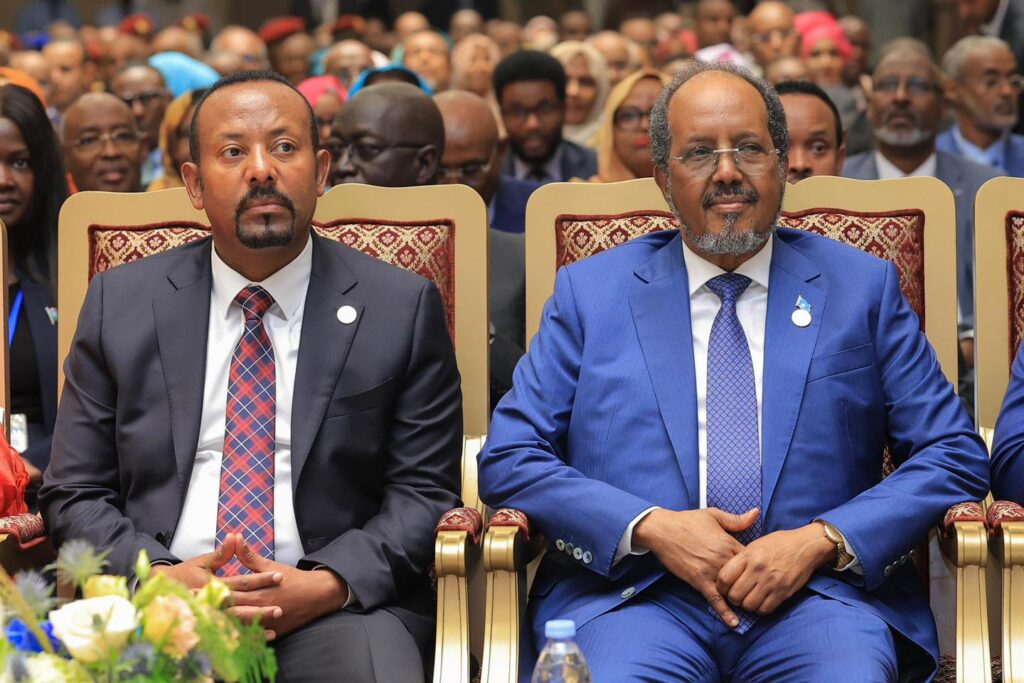
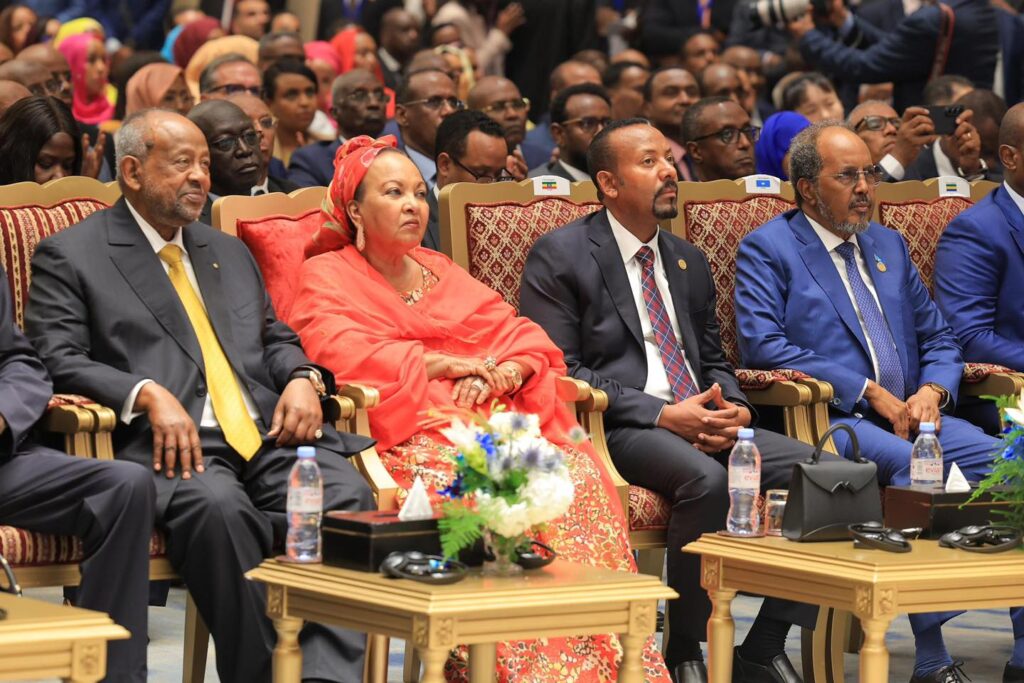
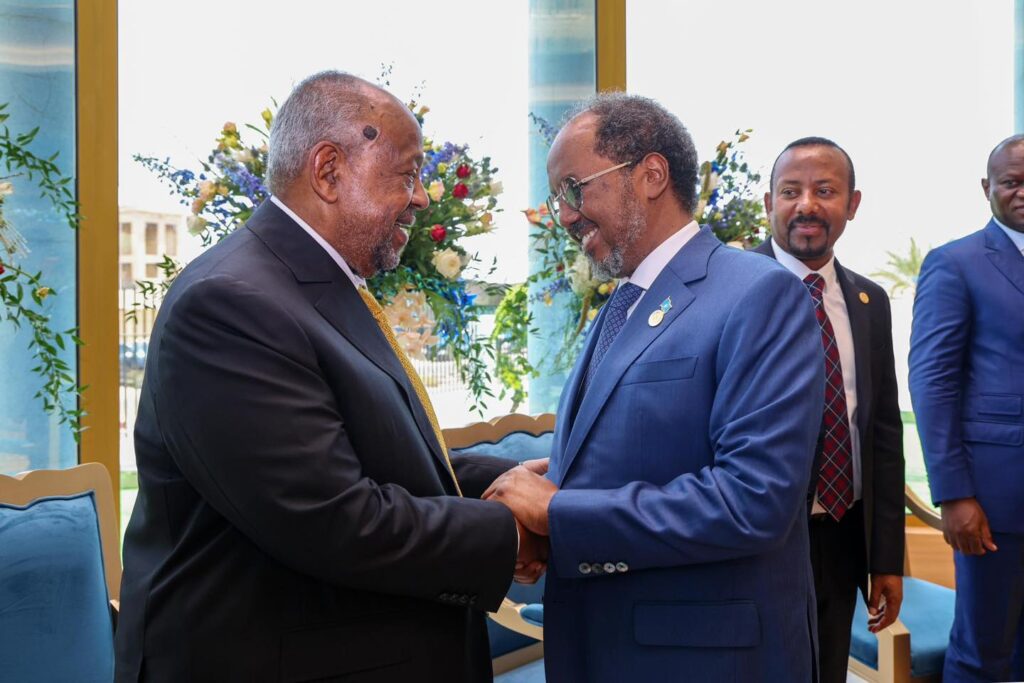
The colourful inauguration ceremony in Djibouti City was attended by several African leaders, among them South Sudan’s Salva Kiir Mayardit and Abiy Ahmed, whose participation underscored the strategic importance of strengthening transport and trade links within the Horn of Africa.
Also president was Somalia’s Hassan Sheikh.
Addressing guests during the ceremony, President Guelleh said his new administration would focus on economic growth, regional trade and infrastructure connectivity.
He noted that stronger partnerships among East African countries would create new economic opportunities and improve access to global markets for landlocked nations.
The DESSU corridor, standing for Djibouti, Ethiopia, South Sudan and Uganda, is one of the key regional projects expected to reshape trade across Eastern Africa. The proposed corridor seeks to connect the Port of Djibouti with inland countries through an integrated network of roads, railways, pipelines and communication systems.
For countries such as South Sudan and Uganda, the project is expected to offer alternative trade routes and reduce overreliance on existing transport corridors.
Djibouti has over the years become one of Africa’s most strategic maritime hubs due to its location along the Bab el-Mandeb Strait, a critical shipping lane connecting the Red Sea to the Gulf of Aden.
The country also hosts several international military bases and has invested heavily in modern port infrastructure, helping it emerge as a major logistics centre for the region.
President Guelleh’s latest inauguration follows his decisive victory in Djibouti’s April presidential election where he secured approximately 97 percent of the vote, extending his rule to nearly three decades.
Official figures showed that Guelleh defeated opposition candidate Mohamed Farah Samatar by a wide margin in an election where most major opposition parties boycotted the process.
The veteran leader first came to power in 1999 after succeeding his uncle, former President Hassan Gouled Aptidon. His administration has largely centred on stability, foreign investment and infrastructure expansion.
Last year, lawmakers removed the constitutional age limit for presidential candidates, enabling the 78-year-old to contest again.
Political analysts say the attendance of regional leaders at the swearing-in ceremony reflects growing recognition that infrastructure connectivity and economic integration will play a critical role in the future growth of East Africa and the Horn region.